Theme: De/constructing the Human: Self, Identity and Other
- Introduction
- Chapter 1: Past (Modernism)
- Chapter 2: Present (Postmodernism)
- Chapter 3: Future (Post-Postmodernism)
- Conclusion
- Bibliography
- List of Illustrations
Introduction
While I was in the unusual limbo-like state of being an artist between degrees, I found myself contemplating my role as an artist and how my work has evolved ever since I began my journey as a creative. I began with a love of storytelling and character creation, which slowly developed into a desire to create with anything I could, whether through drawing or craft-based mediums. However, I also discovered a dislike of being trapped in a box, the idea of only being able to do a singular thing for the rest of my life irritated me to the point where I wanted to discover a way to avoid the box entirely. In this essay, I will be exploring the role of the artist/designer/maker as a timeline regarding the movements of Modernism, Postmodernism and Post-Postmodernism while also comparing the practices and techniques created in those periods to my work and how it has changed throughout my journey. I hope that with this in-depth analysis through time, I will further my understanding of what being an artist means and how I as a creative person can be defined moving forward.
Chapter 1: Past (Modernism)
When considering art as a timeline, I wanted the structure to start in a solid singular way and progressively become more free-thinking and open as time passed. I chose Modernism as the starting point because of the strong authoritarian influence that was present in the work as well as the restrictive thinking creativity had in those times. In this chapter, I will be exploring the concept of Modernism as well as looking at key thinkers, such as Friedrich Nietzsche and Karl Marx, who helped establish grand narratives separate from religion, which was what held the majority of influence during times that pre-date the age of reason and enlightenment.
The Concept of Modernism
Modernism is a philosophical idea that allows people to frame certain works of art and design as modern art. However, modernist forms of art and design became prevalent throughout Western societies as their attempt to come to terms with Modernity, which is the philosophical idea of Modernism, was put into a socio-political context. Modernity was the spark that allowed people to awaken to new concepts, opening their eyes to a more optimistic and utopian way of thinking. This led to a new period of social, political and cultural norms known as The Age of Enlightenment (White, 2018).
Between the late seventeenth and early nineteenth centuries, The Enlightenment occurred primarily in Europe but would later spread to North America. Otherwise known as the Age of Reason, this philosophical movement was titled The Enlightenment due to the illumination of human intellect and culture after being stuck in what was known as the “dark” Middle Ages.
From this illumination of the intellect, prominent minds of the likes of Isaac Newton and James Watt ignited revolutions of both science and industry that helped push humanity into a new era.
However, a key mind from The Enlightenment I was most drawn to was René Descartes. Descartes was an important scientific thinker, known for his contributions to various fields such as philosophy, physics and mathematics. When discussing intellect, Descartes (1637) stated that having a good mind is not enough unless you know how to use it well which he expertly backs up by using his mind to explore numerous topics as well as find new branches, such as being known as an original metaphysician. This way of perceiving intelligence is one I agree with wholeheartedly as having a great mind is one thing but being able to expand on it and use it effectively is a more remarkable thing to possess, either in the context of an artist or as a person.
Establishing a Grand Narrative
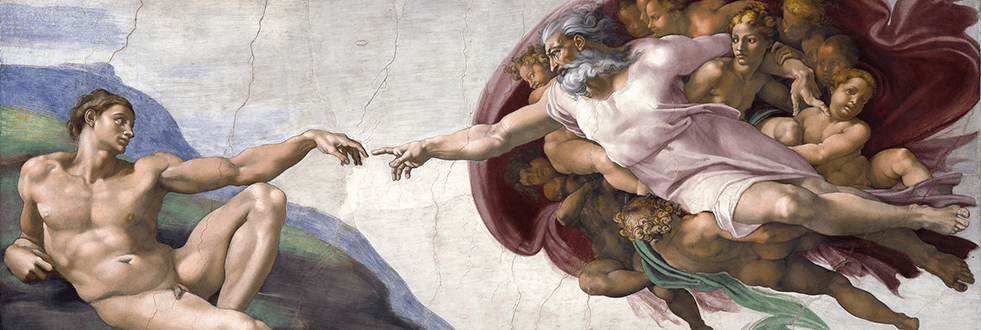
The ability to use your mind in multiple ways is important to creative practices in this day and age but unfortunately was problematic to achieve due to the overbearing presence of a grand narrative. The term grand narrative was coined by Jean-Francois Lyotard who used it to describe metadiscourses of modernity that allowed for the creation of ideologies which reinforced people into a singular way of thinking (Oxford Reference, 2022). Since The Enlightenment, a lot of various ideologies have been formed for people to follow but religion was considered to be the most established grand narrative before the dawn of the Age of Reason. Due to its strong levels of influence, the majority of artists during the Renaissance period had works that took reference from religion or even depicted scenes straight out of the text itself. For example, Michelangelo’s works in the Sistine Chapel are considered a cornerstone of Renaissance art, with pieces such as The Last Judgement and The Creation of Adam being highly detailed fresco depictions of the biblical narrative (See Fig. 1).
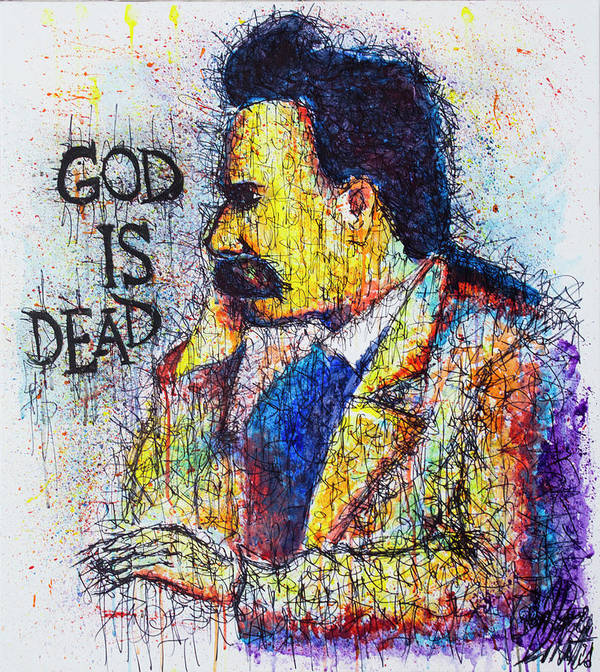
To combat the influence of religion, The Enlightenment also gave birth to scepticism which caused people to have doubts about their faith. In the wake of illuminating intellect, humanity pushed forward in man-made discoveries which led to questions about the existence of divinity and if it existed. A key orchestrator of this theology was Friedrich Nietzsche, a German philosopher who devastatingly demolished the concept of religion to the point where future generations would feel no obligation to follow a faith and choose to not believe in a form of God. Nietzsche (1882) proclaimed that God is dead and warned people to think of the world as a living being, perceiving this death as an act of murder but also as a second chance due to the new freedom given to individuals that would allow them to be responsible for their destiny and envisage a brighter future.
With the mindset of social freedom becoming more prevalent, the fabrication of new ideologies began to rise and create revolutions around the world. A prominent spark that was created from these revolutions was Marxism, a socio-political and economic theory created by Karl Marx, which led to the founding of the political system known as Communism. With a desire for people to reach their full potential, Marx focused on the struggles between the upper and working class to find ways to free the lesser of economic, political and social restrictions. Regarding religion, Marx (1843) describes religion as the opium of the people, showcasing a person’s faith as the heart and soul of an oppressed creature in a heartless world filled with soulless conditions. Although this belief can help empower in certain ways, I believe that Marx thought people themselves had the power to overcome hardships and mused that faith in a benevolent divinity was a constraint that needed to be broken free from.
Art Before University
When comparing my creative journey to my constructed timeline, I found that all my work that was created before enrolling in university closely resembles a modernist format. Due to the state of the education system, it was difficult not to perceive the curriculum as an authoritarian form of a grand narrative because of the strict standards appointed to the grading. To my understanding, if the work did not possess hyper-realistic qualities or a strong contextual meaning, it would not be considered good enough in the eyes of the shadowy assessors. As a new artist with a stylised art style, this authoritarian hold on creativity forced me to stay optimistic and learn through my mistakes although looking back on my work I am immensely proud of what I achieved.

A considerable key thinker that I found myself having a connection to when researching this comparison was John Locke, a British philosopher whose work concerned itself with determining what humans can understand concerning a vast selection of topics. When discussing the topic of education, Locke (1693) compared people to chameleons due to our nature of taking our moral character from those we surround ourselves with. As an autistic artist, I found myself relating to these words more explicitly due to my need to mask to function around those more able-minded than myself.
Chapter 2: Present (Postmodernism)
After deciding on a suitable starting point for a timeline, the next step was to figure out how to move it forward. I chose to focus on the evolving stages of Modernism as it moved through time, progressing into a catalyst known as Postmodernism before exploding into various strings of different topics (Otherwise known as Post-Postmodernism or Metamodernism). In this chapter, I compare the shifts between Modernism and Postmodernism as well as look into Jean-Francois Lyotard’s philosophical theorem discussing the destruction of the grand narrative as a result of postmodernist thinking.

Modernism versus Postmodernism
Postmodernism is a late twentieth-century philosophical movement fuelled by a general sense of subjectivism, relativism and scepticism, along with a concern towards the role of ideology having a place in maintaining economic and political power (Duignan, 2022). When compared to the concept of modernism, a lot of ideas associated with postmodernism can be showcased as the denial of prevalent philosophical viewpoints that were present during The Enlightenment. Even though the viewpoints were not unique during that time, postmodernist thinkers found that they were taken for granted and should be emphasised more in the current period where this movement took place.
Whereas the doctrines of modernism were centred around optimistic and utopian ways of thinking, postmodernism’s process is perceived as more pessimistic and dystopian due to a greater standard of knowledge to apply reason and logic to situations. During the times of The Enlightenment, human beings believed that the increased scientific and technological advances would change future societies for the better and allow people to become more humane and enlightened. However, postmodernists deny this idealised form of thinking and hold this misconceived pursuit of advancements responsible for the devastating developments of technology that led to the massive scale of casualties that took place during the Second World War. In other words, postmodernists hypothesised that due to evil people using science and technology to destroy and oppress helpless others, science and technology are intrinsically destructive and oppressive practices (Duignan, 2022).

With the movement of postmodernism becoming more prominent in Western society, new waves of pluralistic thinking began to become apparent and rise against the modernist singularity process of creation. An artist who stood out during this time was Elsi Giauque, a Swiss textile designer who experimented with the use of threads in the space they occupy and how the use of thread can be recontextualised outside of a misogynistic mindset. Giauque’s work helped feminist methods and theories to emerge and launch a mechanised evolution of art, allowing for the introduction of “the multicoloured threads of female experience into the male fabric of modern art.” (Lippard, 1980, p. 362). Allowing the creative process to be more pluralistic is a more open way for artists to be creative because it allows them to be more expressive in their work in addition to breaking free from ideological influences.

The Deconstruction of the Grand Narrative
With the age of rationalism on the rise, human beings started to become more sceptical towards believing in a form of a grand narrative. The inclination to follow your thoughts and beliefs began to present itself in a more prominent way, which led to a lot of attention to perceiving this concept from a philosophical angle. The collapse of the grand narrative was a key theoretical interest in The Postmodern Condition: A Report on Knowledge (Lyotard, 1984), which promoted a heterogeneous approach that allowed for the possibility of multiple perspectives, diverse in character or content. Lyotard (1984) discussed points that the ideologies represented by nation-states, institutions and historical traditions were losing their attraction to the self due to the growing spread of scepticism that was becoming more prominent as an effect of postmodernism.
As the concept of believing in a grand narrative began to crumble, the fear of being confined to a singular way of thinking allowed chaos to take the reins in the world of creativity. New forms of abstract practices took the spotlight due to artists wanting to showcase multiple perspectives rather than having a singular meaning to their works. Gilles Deleuze put it perfectly when speaking at a conference, at the FEMIS film foundation, titled What is the Creative Act? (Deleuze, 1987). Deleuze (1987) stated that an individual would find themselves “screwed” (Deleuze, 1987) when trapped inside the dream of the Other, which helps further contextualise an artist’s fear of not having the freedom to express themselves uniquely. Therefore, the chaos that has taken over during the collapse of the grand narrative has allowed for the creation of a catalyst to be formed and eventually explode into an assortment of diverse perspectives.
When analysing postmodernist works and comparing them to the trend of chaos, I found myself drawn to the works of Pablo Picasso. As a founder of the Cubism art style, Picasso is most well known for his surrealist and abstract portraits which allow for a new perspective when looking at a person (see Fig. 7). This style of portraiture pulls away from realism and allows for the experimentation of vivid colours and complex shapes, forcing your brain to try and assemble what it is perceiving rather than just having a clear picture. As an artist with a love of random patterns and illusions, Picasso’s work has allowed me to experience creativity in a whole new way and helped me break free of the mould of modernist thinking.

Art Evolving through University
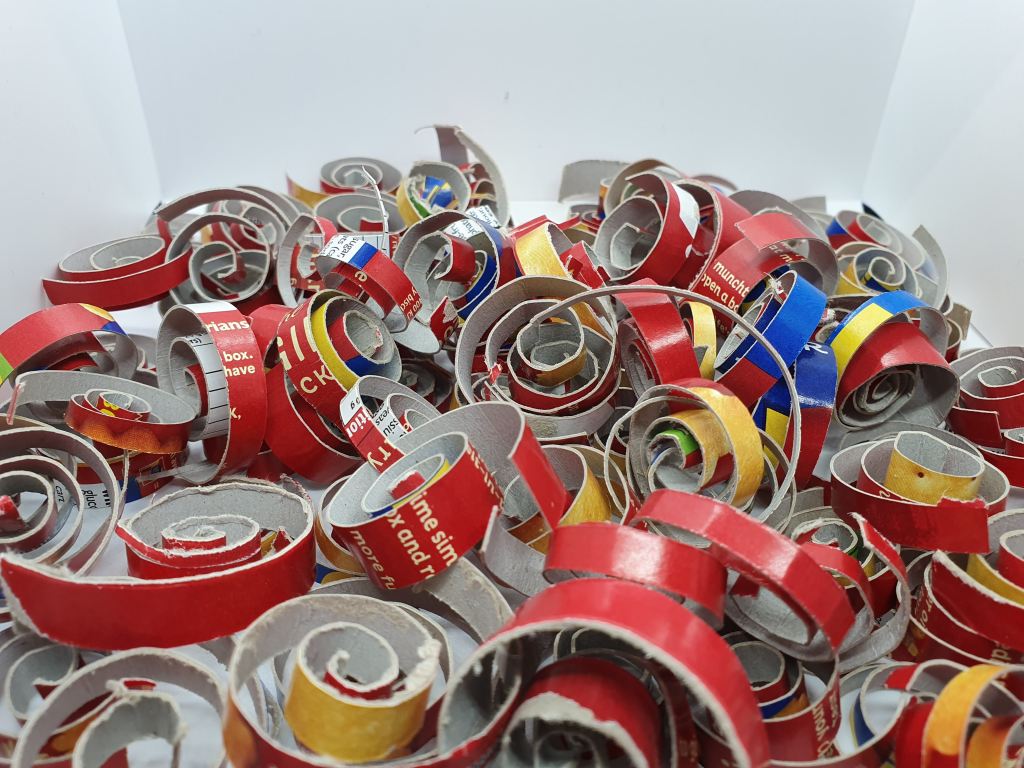
Before arriving at university, my experience as an artist was only limited to what I had learned through curriculum-based practices. While I enjoyed using illustrative mediums to create, I was worried I had been confining myself to a singular way of thinking and wanted to expand my horizons. Within my foundation year, I was allowed to experience different fields and gain a new perspective on how art can be made. This crucial year allowed my mind to evolve from a singularity to a plurality as the essentialist way of thinking that was created by the curriculum started to fall away. Much like a postmodernist approach, I broke away from the grand narrative I had been confined to and began to explore a plethora of new techniques. An example of this can be seen in the figure below, where I experiment with obsessive making through the medium of making with recycled cardboard.
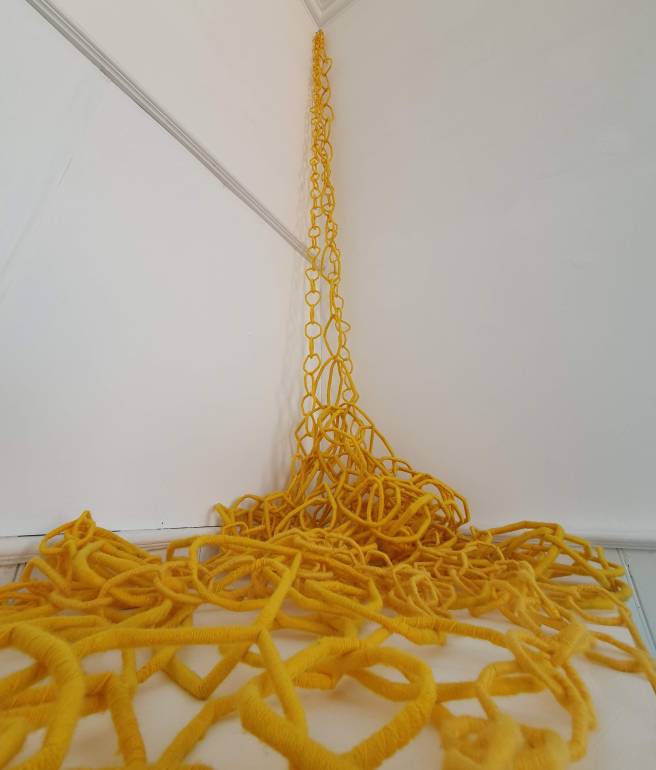
Through indulging in the prospect of exciting new practices, I found myself fascinated with three-dimensional making and contemporary craft. This specialism allowed me to experiment with various materials as well as discover new talents in the form of repetitive making (see Fig. 9). Being able to work in the field of contemporary art allowed me to widen my range of appreciation for colour and technique, along with finding new artists to draw inspiration from the likes of Yayoi Kusama and Antony Gormley. However, even though Craft has been my focus for the past few years, my vision as an artist is ongoing and I have barely scratched the surface of the things I want to create and explore.
Chapter 3: Future (Post-Postmodernism)
Upon figuring out the means of postmodernism in correlation to the constructed timeline, the next logical step was to look beyond and see how the process has evolved. Post-postmodernism, otherwise known as Metamodernism, is a term of phrase to describe the vast range of developments in art, culture and society that came when exploring what can be created beyond postmodernism (Turner, 2015). In this chapter, I investigate a few select branches of Post-postmodernism and highlight their key aspects with practices concerning art and design.
Poststructuralism
When examining all the various branches generated from the creation of Post-postmodernism, a great starting point was to look into notions that opposed ideologies and created their own unique way of thinking. Poststructuralism is an intellectual philosophical project that strives to build upon the ideas presented by structuralism but also rejects those ideas as a way to challenge what can be accepted as knowledge and truth (Woodward et al, 2009). The idea of poststructuralism establishes and reinforces its boundaries as well as focuses on binary oppositions put in place from metaphysics, such as speech/writing and diachrony/synchrony.
Many concepts and theorems involving design were constructed from ideas established by poststructuralism. An example of this would be the concept of Bricolage, a term coined by French anthropologist Claude Lévi-Strauss derived from the word bricoleur meaning a jack of all trades. Bricolage is known in design as the skill of using whatever is at hand and recombining the parts to create something new, allowing for the fabrication of an artefact consisting of either similar material or mixed media. Lévi-Strauss (1908-2009) once said that objects are significant as they carry evidence of the existence of human beings and we have accomplished this through our existence (Eller, 2022). As an artist with a specialism in making, I felt connected to the concept of bricolage because it allowed me to remain active in different mediums instead of being confined under a single practice, especially since the majority of techniques I used stem from the idea of using whatever materials I have at hand (see Fig. 10).

Another example of a concept originating from poststructuralism is a theory known as Assemblage. From the minds of Gilles Deleuze and Félix Guattari, a pairing made up of a French philosopher and French psychoanalysis, the concept of Assemblage essentially describes the processes of arranging, organising and fitting together. When discussing their array of various concepts, Deleuze and Guatarri (1987) compared a concept to a brick with the reasoning that they can be used to build as a collective or rebel uniquely. In terms of art, the practice of Assemblage can be used to create large-scale pieces constructed of smaller objects arranged and fitted together in a certain way. A case of this can be found in the work of Kevin Champeny, an American mosaic artist who creates large-scale portraits made up of smaller objects that have significance to the person depicted in the portrait. In the figure below, you can see an example of this practice where a large-scale portrait of Donald Trump is made up of small repeated hand gestures.

Posthumanism
When analysing the effects that the movement of postmodernism caused, a branch of post-postmodernism was found that is dedicated to the conceptualisation of who we are as humans. Posthumanism explores the philosophy of the self, and what it means to be human, through various types of theoretical and analytical practices. In hopes of innovation, posthumanism dives deep into an elaboration of novel concepts focusing on self-discovery since Not all of us can say, with a degree of certainty, that we have always been human or that we are only that.” (Braidotti, 2013). Furthermore, posthumanism itself is a branch of post-postmodernism that has become an umbrella field that encompasses a diverse array of topics dedicated to identity, including work analysing subjects such as disability, feminist and queer studies.
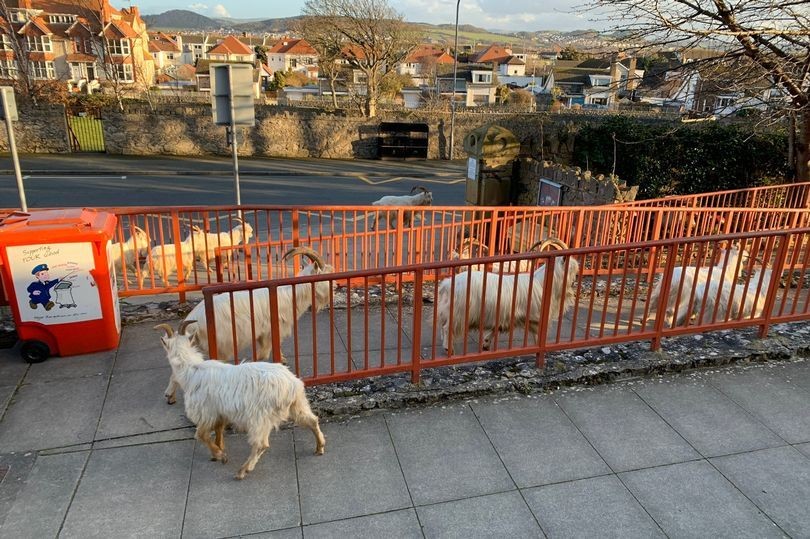
Posthumanism also helps to create a perspective based on how change is enacted across the globe. An instance of this is the examination of the impact caused by the Covid-19 pandemic and how it has affected society. Often referred to as the ‘disease of stoppage’, the pandemic caused immense disruption ranging from the effects that fell on the social and political states of countries to the mass physical and mental suffering that befell upon the people (UK Health Security Agency, 2022). The basis of human community and mobility became conduits for the virus, restricting human beings to a life of solitude in hopes of keeping everybody safe. However, amidst all the deaths and defamiliarization, a glimpse into what would follow humanity’s extinction was discovered as non-human animals started to thrive and venture into urban settings due to the drastic decrease in human traffic (see Fig. 12).
With this glimpse of the wonder of nature’s power, the argument of human versus nature has become more concerning. Since the last ice age, human civilisation has been developing within a stable climate spanning an epoch of 12,000 years otherwise known as The Holocene. However, due to the extreme acceleration of CO2 emissions, rising sea levels and Deforestation, the impact on humanity has become so profound that we have entered a new geological epoch, The Anthropocene, as well as created a dramatic surge of human activity known as The Great Acceleration. Our impact as a society has universally caused a devastating effect on the planet we all live upon to the point where “the new universality consists in feeling that the ground is in the process of giving way.” (Latour, 2018). Therefore if these trends continue to climb, it will hasten the self-destructive tendencies of the ideologies formed by humanity which will in turn cause a voluntary human extinction. An example of the effect caused by humanity’s hubris can be shown in the figure below, depicting a rowboat piled high with plastic bags full of rubbish.

Transhumanism
Where one path in posthumanism leads to the study of self-assured destruction, another pathway focuses on the betterment of humanity through the incorporation of technology. Transhumanism is a philosophical and scientific movement that focuses on enhancing the human condition by advocating the use of sophisticated technologies that can greatly improve cognition and longevity (Ostberg, 2022). By weaving the human body with technology, transhumanism redefines the meaning of cyborg by describing it as “a kind of disassembled and reassembled, postmodern collective and personal self.” (Haraway, 2013). Although the concept of transhumanism feels like a work of science fiction and completely unobtainable, it becomes more possible every day as new advancements in technology can lead to all kinds of discovers concerning how we can better the self such as practices involved in the research of advanced prosthetics to help the betterment of the livelihood of disabled people (see Fig. 14).

However, many people believe that using technology to enhance the human condition can lead to negative effects. With scientific advancements developing into more sophisticated forms, there is a fear within society that we as people are becoming too dependent on technology and the psychological hold it has on us. Whether it is perceiving technology as an addiction that saps a lot of time and energy away from our lives or over-analysing the advancements of technology as something sinister. Due to the developments of artificial intelligence becoming more sophisticated, people believe that technology will turn against us. An example of this terror can be seen in some of the works created by Banksy, a British street artist who comments on the issues that technology has on society through this sketch depicting a symbiotic relationship between man and technology.

The concept of transhumanism has also made innovations in the world of narrative and storytelling, further developing fiction to include how humanity can evolve with the help of technology. Cyberpunk is a subgenre of science fiction focused on storytelling within a dystopian futuristic setting, much like speculative fiction and its subgenre centred around the post-apocalypse (Neon Dystopia, 2015). The concept subject matter usually consists of a combination of lowlife and high-tech, showcasing technology such as cybernetics and artificial intelligence in contrast with the collapse of society. A newer form of this is shown in the video game Cyberpunk 2077 (2020), an open-world adventure story set in a metropolitan cityscape, where the citizens are obsessed with glamour, power and body modification. The story allows the player to experience life in this dystopian future while exploring all the different ways technology can enhance the human condition, showcasing a glimpse into what humanity can achieve with scientific innovation.

Conclusion
In conclusion, after analysing the progression of modernism through the lens of my constructed timeline, I believe that the role of the artist/designer/maker has evolved to become more diverse and open when compared to the state of the role predating The Enlightenment. Without the hold of a grand narrative, the subject of art and design has become more expressive and explorative. This has led to the creation of a vast range of disciplines as well as paved the way for more innovative techniques and practices to be developed in the future. Therefore, I strive to investigate all the branches created by the post-postmodernism movement to explore how I can redefine my role as a creative and how my work will evolve in the future. With my passion for storytelling, illustration and 3D making, I want to give myself the title of ‘Storymaker’ so that I do not have to be confined to a box when it comes to being creative and I can freely explore multiple mediums in the hopes of inventing new ways to bring a narrative to life.
Bibliography
Books
Baudrillard, J. (1998) The Consumer Society: Myths and Structures. London: SAGE Publications.
Berman, M. (1983) All That Is Solid Melts Into Air: The Experience of Modernity. London: Verso.
Bird Rose, D., Van Dooren, T. and Chrulew, M. (2017) Extinction Studies: Stories of Time, Death and Generations. United States: Columbia University Press.
Braidotti, R. (2018) Posthuman Ecologies: Complexity and Process after Deleuze. United Kingdom: Rowman & Littlefield International.
Braidotti, R. (2021) Posthuman Feminism. New Jersey: Wiley.
Braidotti, R. (2019) Posthuman Knowledge. New Jersey: Wiley.
Braidotti R. (2013) The Posthuman. Cambridge: Polity Press.
Braidotti R. and Hlavajova, M. (2018) Posthuman Glossary. United States: Bloomsbury Academic.
Butler, C. (2002) Postmodernism: A Very Short Introduction. Oxford: Oxford University Press.
Butler, J. (2011) Gender Trouble: Feminism and the Subversion of Identity. United Kingdom: Taylor & Francis.
Debord, G. (1995) The Society of the Spectacle. Princeton: Zone Books.
Descartes, R. (1637) Discourse on Method. Leiden: Descartes.
Deleuze, G. and Guatarri, F. (1987) A Thousand Plateaus: Capitalism and Schizophrenia. Minnesota: University of Minnesota Press.
Deleuze, G. and Guatarri, F. (2004) Anti-Oedipus. United States: Bloomsbury Academic.
Derrida J. (2016) Of Grammatology. United States: Johns Hopkins University Press.
Derrida, J. (2008) The Animal That Therefore I Am. United States: Fordham University Press.
Ettinger, B. (2006) The Matrixial Borderspace. Minnesota: University of Minnesota Press.
Ferrando, F. (2019) Philosophical Posthumanism. United Kingdom: Bloomsbury Academic.
Fukuyama, F. (1993) The End of History and the Last Man. United Kingdom: Penguin Books Limited.
Haraway D. (1985) A Cyborg Manifesto: Science, Technology and Socialist Feminism. United States: Socialist Review.
Haraway, D. (2013) Simians, Cyborgs and Women: The Reinvention of Nature. United Kingdom: Taylor & Francis.
Haraway, D. (2016) Staying with the Trouble: Making Kin in the Chthulucene. North Carolina: Duke University Press.
Haraway, D. (2008) When Species Meet. Minnesota: University of Minnesota Press.
Harvey, D. (1989) The Condition of Postmodernity: An Enquiry Into the Origins of Cultural Change. New Jersey: Wiley.
Hayles, N.K. (1999) How we become Posthuman: Virtual Bodies in Cybernetics, Literature and Informatics. United States: University of Chicago Press.
Jameson, F. (2013) Postmodernism, Or The Cultural Logic of Late Capitalism. North Carolina: Duke University Press.
Laist, R. (2013) Plants and Literature: Essays in Critical Plant Studies. Amsterdam: Editions Rodopi.
Latour, B. (2021) After Lockdown: Metamorphosis. Cambridge: Polity Press.
Latour, B. (2018) Down to Earth: Politics in the New Climate Regime. New Jersey: Wiley.
Latour, B. (2017) Facing Gaia: Eight lectures on the New Climate Regime. Cambridge: Polity Press.
Levi-Strauss, C. (1966) The Savage Mind. United States: University of Chicago Press.
Locke, J. (1894) An Essay Concerning Human Understanding. United Kingdom: Clarendon Press.
Locke, J. (1880) Some Thoughts Concerning Education. Cambridge: Cambridge University Press.
Locke, J. (1821) Two Treatises of Government. United Kingdom: Whitmore and Fenn and C. Brown.
Lotringer, S. and Cohen, S. (2001) French Theory in America. United Kingdom: Routledge.
Lyotard, J. (1984) The Postmodern Condition: A Report on Knowledge. Minnesota: University of Minnesota Press.
Marder, M. (2013) Plant-Thinking: A Philosophy of Vegetal Life. United States: Columbia University Press.
Marx, K. (1904) A Contribution to the Critique of Political Economy. London: International Library Publishing Company.
Marx, K. and J. O’Malley, J. (1970) Critique of Hegel’s Philosophy of Right. Cambridge, Cambridge University Press.
Nietzche, F. (2020) God is Dead. God Remains Dead. And We Have Killed Him. United Kingdom: Penguin Books Limited.
Snow, C.P. (2012) The Two Cultures. Cambridge: Cambridge University Press.
Still, J. (2015) Derrida and Other Animals: The Boundaries of The Human. Edinburgh: Edinburgh University Press.
Wolfe, C. (2010) What is Posthumanism? Minnesota: University of Minnesota Press.
Wolfe, C. (2003) Zoontologies: The Question of the Animal. Minnesota: University of Minnesota Press.
Conferences
Deleuze, G. (1987) ‘What is the Creative Act?’ Tuesday Lecture Series. FEMIS Film Foundation, 17th March. Paris: La Fémis.
Journals
Angelucci, D. (2019) ‘Cinema and Resistance.’ Deleuze and Guattari Studies, 13(4), pp. 567-579. DOI: https://doi.org/10.3366/dlgs.2019.0381.
Lippard, L. (1980) ‘Sweeping Exchanges: The Contribution of Feminism to the Art of the 1970s.’ Art Journal, 40(½), pp. 362-265. DOI: https://doi.org/10.2307/776601.
Woodward, K., Dixon, D.P. and Jones III, J.P. (2009) ‘Poststructuralism/Poststructuralist Geographies.’ International Encyclopedia of Human Geography, pp. 396-407. DOI: https://doi.org/10.1016/B978-008044910-4.00727-6.
Websites
Duignan, B. (2022) Postmodernism: Philosophy. Available at: https://www.britannica.com/topic/postmodernism-philosophy (Accessed: 9th December 2022).
Eller, K. (2022) Amanda Rowan: Place Setting. Available at: http://lenscratch.com/2022/05/amanda-rowan-place-setting-2/ (Accessed: 10th December 2022).
Merriam Webster (2022) Bricolage. Available at: https://www.merriam-webster.com/dictionary/bricolage (Accessed: 10th December 2022).
Neon Dystopia (2015) What is Cyberpunk? Available at: https://www.neondystopia.com/what-is-cyberpunk/ (Accessed: 10th December 2022).
Ostberg, R. (2022) Transhumanism: Social and Philosophical movement. Available at: https://www.britannica.com/topic/transhumanism (Accessed: 10th December 2022).
Oxford Reference (2022) Overview: grand narrative. Available at: https://www.oxfordreference.com/display/10.1093/oi/authority.20110803095903493 (Accessed: 8th December 2022).
Stanford Encyclopedia of Philosophy (2001) John Locke. Available at: https://plato.stanford.edu/entries/locke/ (Accessed: 9th December 2022).
Stanford Encyclopedia of Philosophy (2014) René Descartes. Available at: https://plato.stanford.edu/entries/descartes/ (Accessed: 8th December 2022).
Turner. L (2015) Metamodernism: A Brief Introduction. Available at: http://www.metamodernism.com/2015/01/12/metamodernism-a-brief-introduction/ (Accessed: 10th December 2022).
UK Health Safety Agency (2022) COVID-19: epidemiology, virology and clinical features. Available at: https://www.gov.uk/government/publications/wuhan-novel-coronavirus-background-information/wuhan-novel-coronavirus-epidemiology-virology-and-clinical-features (Accessed: 10th December 2022).
White, M. (2018) The Enlightenment. Available at: https://www.bl.uk/restoration-18th-century-literature/articles/the-enlightenment (Accessed: 8th December 2022).
Video Games
Cyberpunk 2077 (2020), PC/Mac [Game]. CD Projekt: Poland.
List of Illustrations
Figure 1: Michelangelo (1512) The Creation of Adam [Painting]. Available at: https://m.museivaticani.va/content/museivaticani-mobile/en/collezioni/musei/cappella-sistina/volta/storie-centrali/creazione-di-adamo.html (Accessed: 8th December 2022).
Figure 2: Maria De Nittis, G, (2022) Nietzsche painting God is Dead Art Print [Art Print]. Available at: https://pixels.com/featured/nietzsche-painting-god-is-dead-gian-maria-de-nittis.html?product=art-print (Accessed: 8th December 2022).
Figure 3: Mathias, S. (2016) Portraits of Emotion [Illustration].
Figure 4: Mathias, S. (2022) Constructed Timeline [Illustration].
Figure 5: National Archives (1945) Atomic Bomb Cloud over Hiroshima [Photograph]. Available at: https://www.atomicarchive.com/media/photographs/hiroshima/mushroom-cloud.html (Accessed 9th December 2022).
Figure 6: Giauquq, E. (1931) Elements: Threads in Space [Installation]. Available at: http://www.thevitrine.com/inspirationblog/2017/2/16/threads-in-space (Accessed: 9th December 2022).
Figure 7: Picasso, P. (1925) Le Baiser (The Kiss) [Painting]. Available at: https://focusonpicasso.com/product/le-baiser-the-kiss-2/ (Accessed: 9th December 2022).
Figure 8: Mathias, S. (2020) Experimentation through Making [Craft]. Available at: https://samuelmathias.art/technical-portfolio/ (Accessed: 9th December 2022).
Figure 9: Mathias, S. (2022) The Joy of Repetition [Installation]. Available at: https://samuelmathias.art/digital-portfolio/ (Accessed: 9th December 2022).
Figure 10: Mathias, S. (2019) Multisensory Texture Doll [Sculpture]. Available at: https://samuelmathias.art/digital-portfolio/ (Accessed: 10th December 2022).
Figure 11: Champeny, K. (2021) Still Defiant [Mosaic]. Available at: https://www.kevinchampeny.com/still-defiant (Accessed 10th December 2022).
Figure 12: Jones, I. (2020) Wild Goats taking to the quiet streets of Llandudno [Photograph]. Available at: https://www.weforum.org/agenda/2020/04/covid-19-cities-lockdown-animals-goats-boar-monkeys-zoo/ (Accessed: 10th December 2022).
Figure 13: Mattingly, M. (2012) Floating a Boulder [Photograph]. Available at: https://artsandculture.google.com/asset/floating-a-boulder-mary-mattingly/VwHp_WPOJlm-TA?hl=en (Accessed: 10th December 2022).
Figure 14: Vintiner, D. (2020) Bionic Arm [Photograph]. Available at: https://edition.cnn.com/style/article/david-vintiner-transhumanism/index.html (Accessed at: 10th December 2022).
Figure 15: Banksy (2014) iPhone Addiction [Sketch]. Available at: https://www.cultofmac.com/293535/banksys-latest-sketch-terrifying-reminder-iphone-addiction/?utm_source=pinterest&utm_medium=social#WJedm5grhG8QUQBf.32 (Accessed: 10th December 2022).
Figure 16: CD Projekt (2020) Cyberpunk 2077 Cityscape (Screenshot). Available at: https://www.cyberpunk.net/gb/en/ (Accessed: 10th December 2022).

 Samuel Mathias