- Introduction
- Chapter 1 – The Thought Experiment
- Chapter 2 – Explorative Research Praxis
- Chapter 3 – Confirmative Praxis
- Conclusion
- Bibliography
- List of Illustrations
Introduction
Eight years ago, I started my journey as an artist with absolutely no knowledge but a mind full of creative potential and a passion for storytelling. Over the years I have been taught many different disciplines and allowed myself to weave my skills to adapt to several processes. Unfortunately, one project after another my love for narrative did not quite make its way to the final piece and always ended up getting lost somewhere in the conceptual stages of the process. That is why I went into this course with the determination to bring that passion back to life and finally have the story be front and centre at the end of a project. In this report, I will be going over the key events of the process that took place across the three major modules that exist within this course, while also discussing the exploration of ideas that I went down at each junction to provide insight into how I evolved through the stages as we go from project to project.
Chapter 1 – The Thought Experiment
Rather than perceive this course as a complex medley of modules, it is easier to consider each module as a segment of the process an artist takes from the start of a project to the end. In my mind, when it comes to projects they can be easily broken down into three core steps, Play/Experimentation, Research, and Production. Therefore, in this chapter, I will be exploring the thought experiment as an all-encompassing stage of experimentation that would ignite my inspiration going into my praxis, as well as discussing all the trials and tribulations that came with this particular project.
Exploration of Ideas
Initially, I was not aware of the concept of thought experiments and what use they really had within the context of art and design. Stanford Encyclopedia of Philosophy (2023) dictates that thought experiments are basically just devices of the imagination, but that can only be considered the baseline of what an experiment can become. The only thing that can fuel a thought experiment is imagination itself and the limits of the experiment conducted are only bound by the limitations of the person’s imagination. No thought experiment will ever be the same as they serve only one key purpose, to form a catalyst to inspire a person’s way of thinking in unspoken ways which can push the barriers of what can potentially be created.
As I discovered the premise of the thought experiment and was given the prompt to begin with, I started my usual process which typically consists of letting my mind sporadically splurge ideas onto a page. This stage starts by writing two lists, one consisting of concepts and the other consisting of themes, and combining a series of them together to create varied project ideas across a range of conceptual thinking. At this point, I found a lot of the ideas that surrounded themes of altered perception had a lot of promise and wanted to dive deep into what avenues could be explored. When it comes to how we perceive the world, “There are things known and there are things unknown, and in between are the doors of perception.” (Huxley, 1954). From this understanding I wanted the focus to be on my own perception and how I saw things since my prompt of practising make-believe fell right into that form of structured thinking.

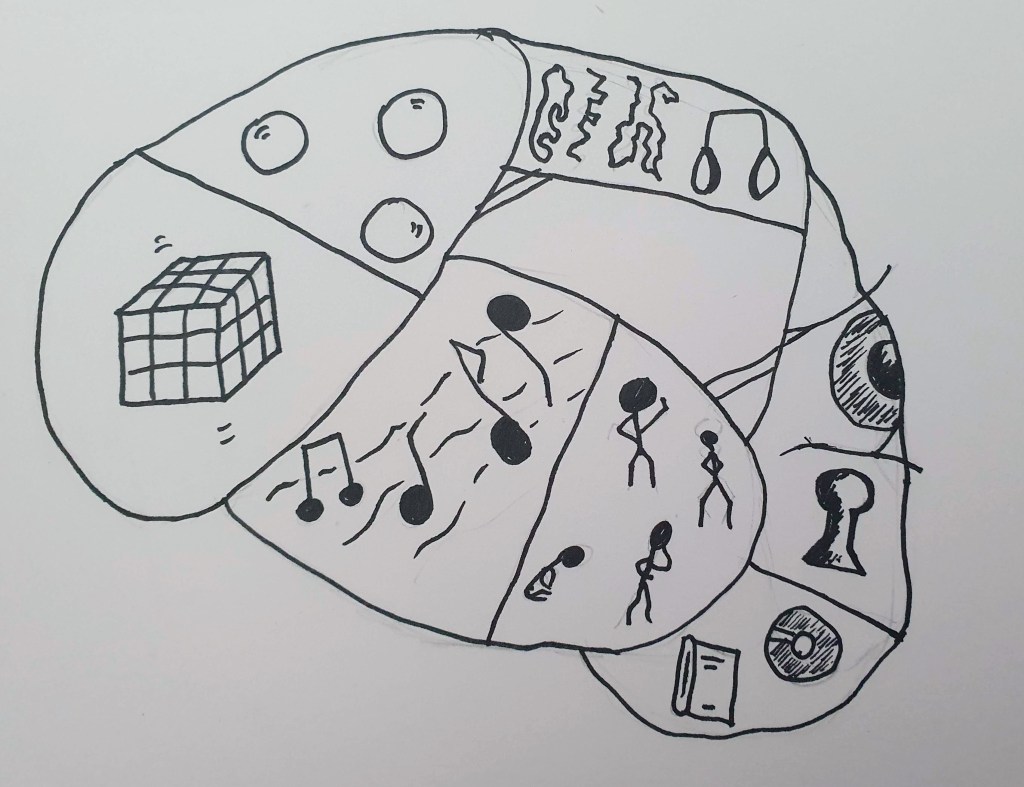
When it comes to my own perception, I have had a lot of experience figuring it out and seeing how it ticks. As an autistic person, I need to know all the ins and outs of my brain both at its best and at its worst. Since I wanted to use my own way of perceiving the world as the base for this thought experiment, I chose to look deeper into all aspects of my brain and how they can be interpreted through my art style. Additionally, as this project as a whole was considered to be proficient in pushing me outside of my comfort zone, it was quintessential to study my inner mechanics throughout since if you really “want to know how things really work, study them when they’re coming apart.” (Gibson, 2010).
Characters of the Mind
I decided that the best way to showcase the aspects of my mind was to present them in personified forms, giving them a perceivable form that people can see rather than keep them caged within my mind and only subjected to my perception. This would allow me to use this project as my first step going from a primarily 3D-making thought process to a 2D illustration process. This would also allow me to experiment with personified forms that are not necessarily bound to conventional proportions. I decided to look into the characters of my favourite illustrators such as Chris Riddell and Tony DiTerlizzi as their art styles have been the most influential to how I draw characters and creatures.
Riddell’s work in particular has been an inspiration for my art style ever since I began becoming an artist. One of the first techniques I was taught was to cross-hatch and I was immediately drawn to the ways Riddell uses this method to bring quirky characters to life. As shown in the figure below, their strong technique to shade forms while also providing intricate details to illustrations without the need to focus on bold colours to attract the eye was influential and helped strengthen my monochromatic art style. Riddell (2023) also once said that when it comes to the process of drawing lose your inhibitions and just do it, which helped me substantially in regards to just having fun with my illustrations and not overthinking about the finer details like making sure everything has to be perfect.

DiTerlizzi has a way of weaving whimsy and fantastical elements into their illustrations which both enriched my art style as well as my imagination when it comes to storytelling. Their art allows for creatures to have a shared perception of beauty and darkness, showcasing the creepy and twisted elements of monsters pleasingly. An example of this can be seen below where DiTerlizzi breaks down a goblin much like how you would see an insect in a nature guide, showing the finer details of grotesque fangs and talons but also adding curious elements within the finer notes of examining the subject. In contrast to the strong monochromatic art style of Riddell, both artists influence my way of thinking as well as give me the confidence to create characters of my own without the fear of being too hyperrealistic with my creations. In regards to how they have helped shape my final piece, their uses of strange posture and body language have influenced my protagonist and how they are conveyed within my story, allowing the gift of a mysterious breath of life as they move from page to page.

At this stage of the project, I also took part in some drawing experimentation to help me practise elements of character design as well as how I can apply a narrative to a random creature. I tackled this aspect by participating in the drawing challenge Inktober which was created by Jake Parker in 2009 as a way to “improve his inking skills and develop positive drawing habits.” (Inktober, 2023). The challenge itself tasks participants to draw every day of October with only a prompt as a point of inspiration. Typically people use this more as a fun way to get into the habit of daily drawings but for the past few years, I have been using this challenge to develop my cognitive thinking and thought process of how characters can be perceived. I mainly do this by taking the daily prompts and applying them to a personified object or creature that best represents it, often combining multiple definitions of the prompt to create an absurdly comedic illustration. They can also contain a dark twist since a lot of my influence would stem from Halloween taking place all throughout October for me.
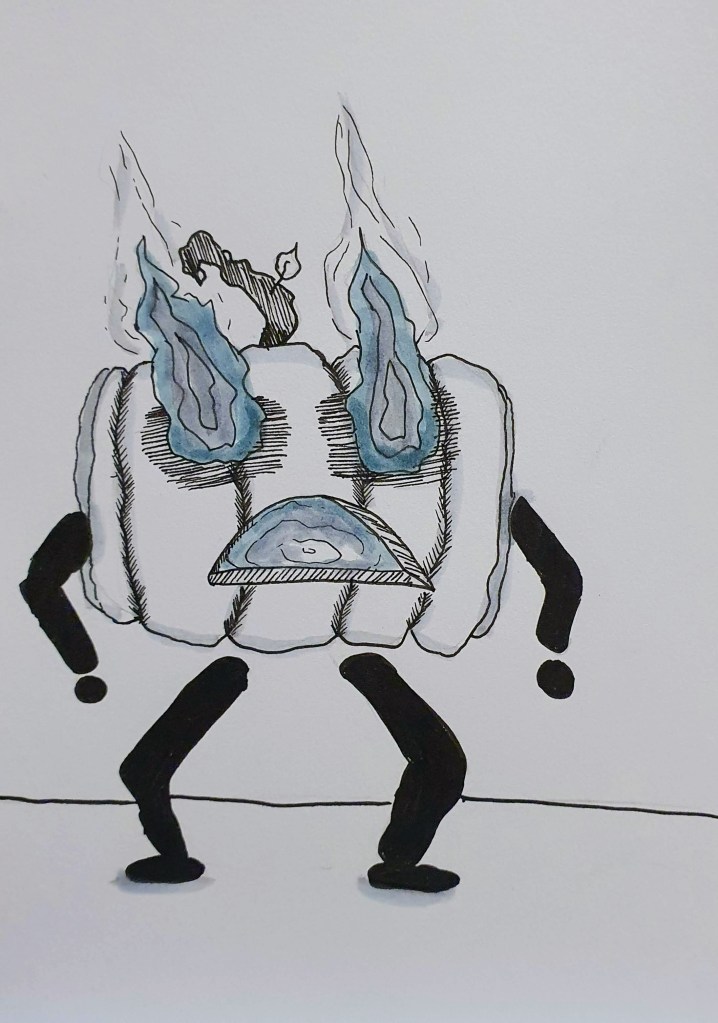
When it came to the characters themselves that I wanted to use for the project, I had to figure out which elements of my psyche I thought would be the best to showcase as well as which aspects would be the most interesting to give a physical form. To allow myself to consider which parts of myself to choose, I thought back to words once spoken by Joseph Conrad, a Polish-born English novelist most known for his work Heart of Darkness (1899). Conrad (2012) once said that the mind of man is capable of anything, which in my mind translated to the potential of looking at both the positive and negative aspects of my psyche. I channelled these words and looked at a wide variety of things that strengthened me as a person, ranging from pet peeves and annoyances to deep-seated fears and absent-minded projections. This influenced the illustrations themselves as rather than the characters being odd little creatures like my Inktober submissions, they turned into darker forms that held more depth and insight into how my brain works.

Downward Spiral – Dealing with Spite
It was at this point in the project that things began to start skyrocketing downwards. As an autistic artist, I find that it is incredibly difficult to perform in front of people due to the impulsivity of my thoughts as they beckon into my mind and tear it to shreds. With the final piece of this project being something that had to be live, it caused such severe shut-downs that when combined with other outside factors, like the collaborative dialogues module, I remember wanting to just plunge my thumbs into my eye sockets and split my skull in two. I knew that if I wanted to reach the other side of this project with my sanity intact, I needed to approach it from a different angle and use an additional emotion to fuel my creativity. As someone who can push myself beyond limits, I chose to use spite as a driving force to complete what was necessary since I can confidently say that I have an “uncompromising ability to feel spite.” (Kirino, 2007).

I decided that to achieve an end product that showcased both my work and my mental struggle, I wanted my final piece to be a piece of performative art that leaned more into the absurdist elements of comedy. At this stage of the project, I found myself inspired by the words of Albert Camus, who is a French writer and philosopher best known for their works concerning the absurdity of the human condition. Camus (1991) noted that existence itself was illusory and also eternal, meaning that whatever we choose to do does not necessarily hold any weight in the long run. Therefore I took it upon myself to look into the strangest of the strange when it came to performance art, inspired by the works of Jan Hakon Erichsen and Han Bing that allowed me to think outside the box and see the potential in what I could create. These absurdist elements even went on to influence my final piece, weaving their way into the strange quirks of the focal character as well as additional mannerisms to the writing itself.


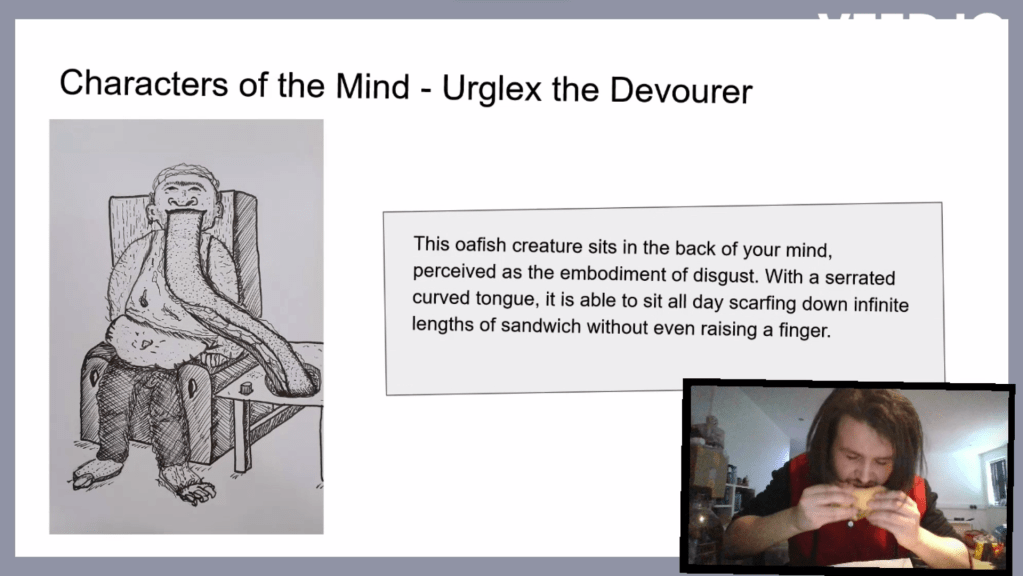
As I found myself swimming upstream through the shutdowns and stress, I found solace in the curiosity of performance art and what I could unleash with my creativity fully fueled with both absurdism and spite. I came up with the idea of having the performance be based around the concept of ‘Presentation Gone Wrong’ where one of the characters of my mind has fully taken the wheel and caused a hiccup in events. When it came down to it, my final three choices were a disgusting feast of gluttony, a chaotic hoarding of greed and an explosive outburst of spite itself which would be the catalyst for causing the presentation to go awry. After some consideration, I went with gluttony since the character portrayed in this concept would be the personification of my overstimulation which I found amusing to subject others to. The final piece itself was a video presentation of me planning to showcase all the characters of my mind, but I began to lose control and ended up chaotically devouring a meal in an entirely displeasing way as the presentation itself continued on its own. Quite frankly I was astounded at what was made and extremely proud of myself for getting through everything, although I will say the whole experience definitely put me off Subway for a while.
Chapter 2 – Explorative Research Praxis
From observing all of the modules as segmented chunks of the artistic process, this particular module would embody the step of research that allows the artist to have focal points of inspiration to help them progress. Most of the time, this stage tends to be the first step but regarding my own process, I find that it is a lot easier to allow myself time to experiment with materials and techniques and build them up with research once I have found what I want to do. In this chapter, I shall discuss the avenues of research I looked into when allowed the opportunity to explore pathways without restraint.
Technique Experimentation
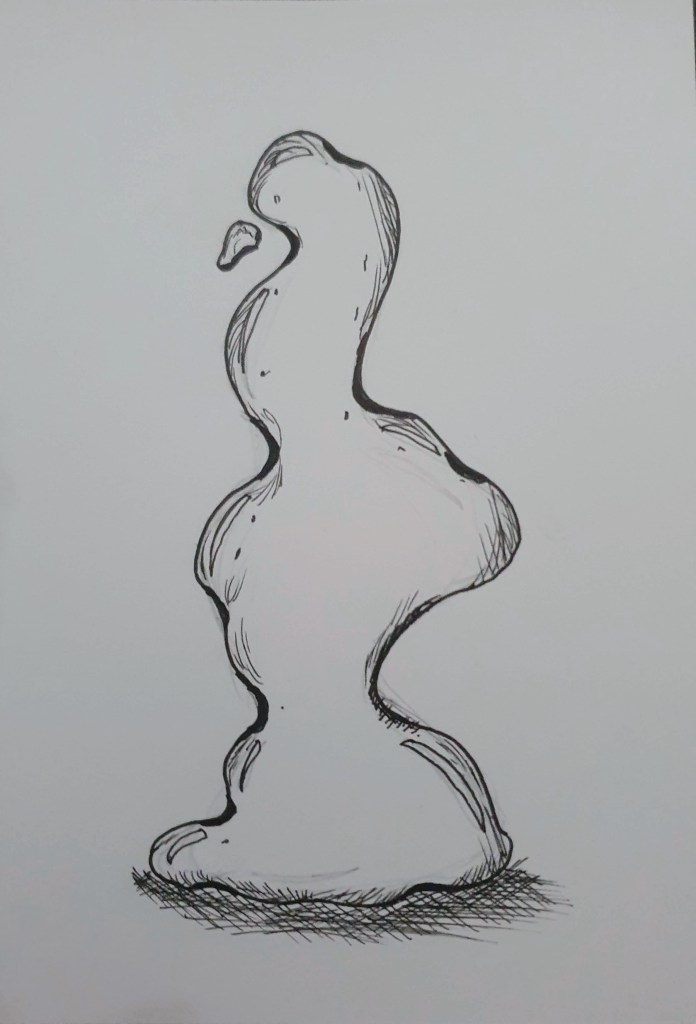
At the start of this module, I was thinking about all of the ways that my process has evolved over the years. More specifically, after developing my techniques in illustration I have found that it has also strengthened my skills with adapting narratives to my characters. With that in mind, I wanted to try various techniques to help exercise my thought process since “the imagination is a muscle. If it is not exercised, it atrophies.” (Gaiman, 2023). I began my experimentation by illustrating the steps of my character creation process, allowing myself to see a visualisation of how I form characters rather than just having all the steps in my mind. This helped me figure out what vital steps were necessary for their creation as well as what steps I could take out of the process to use as building blocks for experimentation.
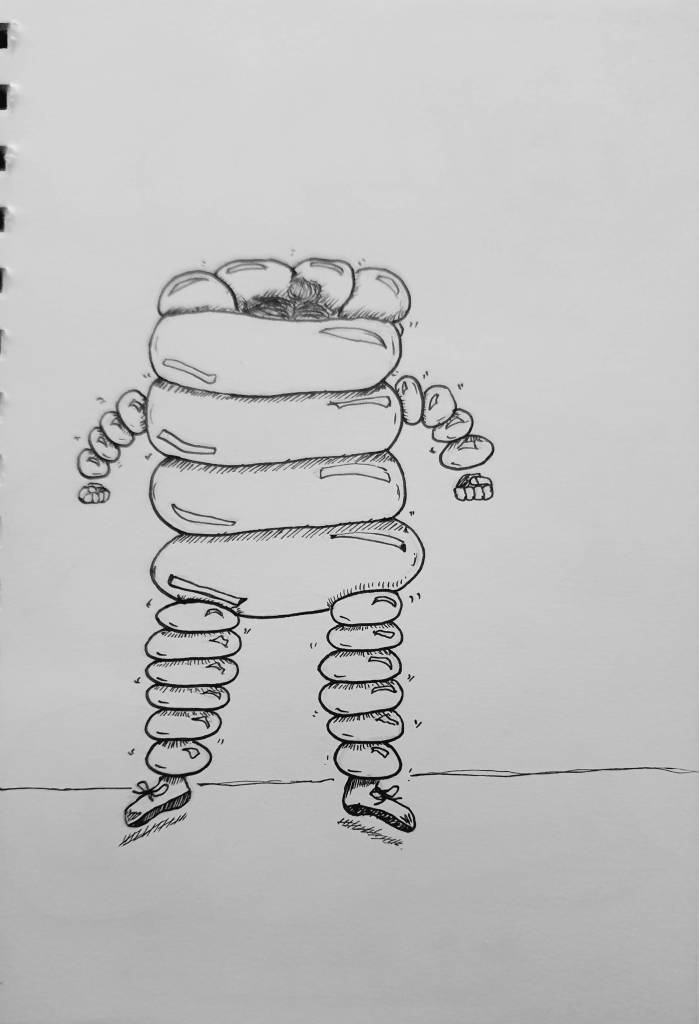
Once I had all of the steps of my process mapped out, I started to take inspiration from unique strangers that I would watch while walking through the city day by day. While living in a city can be quite crowded and overstimulating, it offers the opportunity to observe people and allow your mind to blow your perception of them out of the water. Now these strangers I happened to come across might have just been normal to the naked eye, but if you can focus on the finer details then “you can observe a lot by just watching.” (Manly, 2023). That is why the combination of honing in on the individual traits and adding an absurd narrative to expand on them can create a bizarre creation, perfect as an experimentation technique.
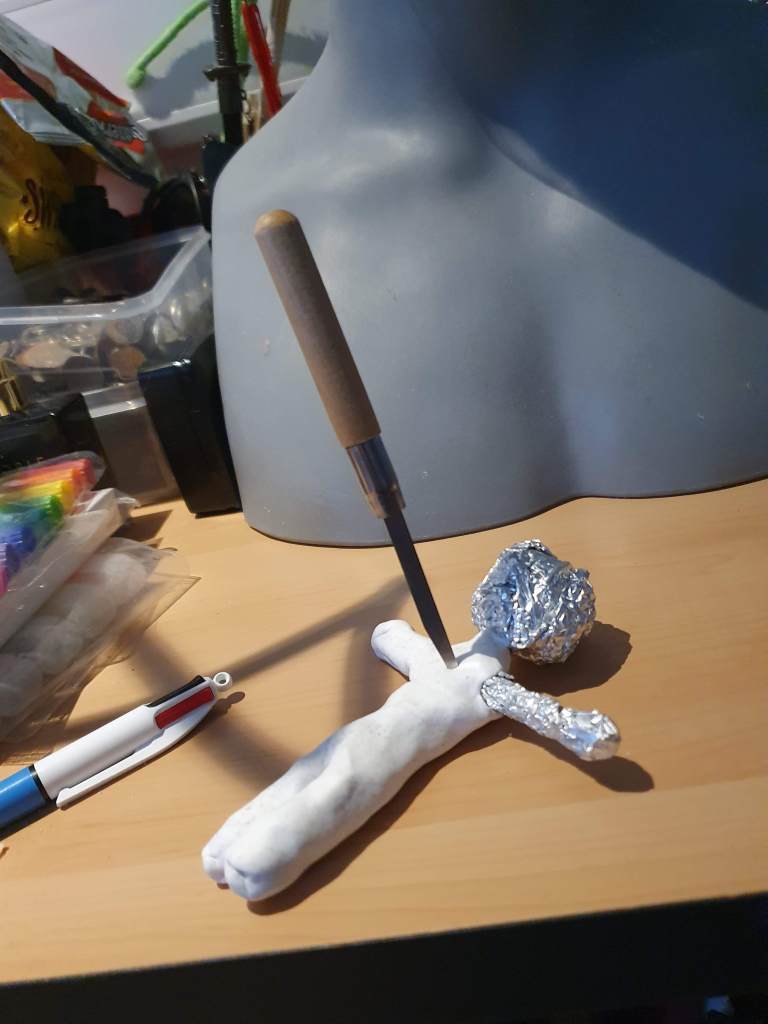
As my background before this course was in Design Craft, I have had a lot of experience with experimenting with materiality and determining what materials I can work with given my limited dexterity. A material that I had not used before and I was eager to try was polymer clay as I had a good understanding of ceramics as well as the knowledge that the material itself is used to help create 3D models. However, as an autistic artist, I can quickly find myself shutting down if I am working with a material that can hold upsetting sensory qualities. I found that when working with polymer clay, the slimy texture and rigid workability were an unholy combination that brought upon a release of fury towards the product I was making. Therefore, this led me to believe that my final project would primarily be illustrative rather than 3D as this would be the best format to tell the story that I wanted to tell.
Narrative Research
Having explored all of the physical ways I could expand upon my process of creating a narrative, the next stepping stone would be to look into how I can develop my understanding of how a narrative can be created. This led me to the discovery that characters themselves can be broken down into two separate categories, the role a character can have in a story and the qualities the character can possess throughout a story. After collating this research, I have found that my understanding of the potential a character can have can be strengthened when allowing them to have a pre-built role or quality that will help them either stand out or evolve within a story. In the future, I would look into character dynamics alongside this research as this could have helped strengthen the story told between the main protagonist of my story and the catalyst of their grief as well as enhance the impact that grief would have on the reader.

In the next stage of looking into the ways I can help improve my understanding of narrative, I decided to move on to the study of repetition when it comes to plots. Christopher Booker is an English journalist and author who wrote The Seven Basic Plots: Why We Tell Stories (2004) which discusses subjects like Meta-Plot and the Rule of Three that are used to add further levels of depth to a basic plot that allow for a more unique storytelling experience. Booker (2004) goes on within the book to say that the underlying purpose of all art is to create patterns of imagery which can convey a sense of life, which can be interpreted to showcase how vital stories are to the mind and how many patterns we can visualise if we look deeper into the finer details. Knowing all of these practices went on to influence the meticulous design stages of my final animated storybook, allowing me to critically go through every step of the story to make sure the flow stayed central and allowed the reader to follow along at a steady pace.
In terms of how a narrative can be structured without the underlying elements of basic plots and character archetypes, I wanted to find a way of how a whole story of a character can be mapped out to its bare parts to have a structure of a character’s journey. A perfect summary of this was found in Joseph Campbell’s The Hero with a Thousand Faces (1949), which analyses the concept of a hero’s journey and the stages that a main character can go through in a story. In terms of who this example can relate to, the protagonist’s role within a story is to help push the narrative in a certain direction, often becoming the role of “someone who has given his or her life to something bigger than oneself” (Joseph, 2011). With that in mind, this analysis has allowed me to consider what kinds of layers I can apply to the core characters I want to portray in my final piece and how they can shift a story based on their actions within it.

Genre Research
I began conducting my research by looking into the subject of genre and how specifically films are classified within certain genres. I started this by taking note of all the various genres I could find as well as analysing their definitions by looking across sets of examples within set examination boundaries. With this methodology, I found that there are a lot of repetitive patterns within genres themselves, mainly in the form of colour choices and font styles that draw emphasis to the story elements in subtle ways. This led me to realise that there are a lot of appealing qualities in these patterns which can bring a lot of joy to spot since “aesthetic enjoyment is recognition of the pattern” (Oxford Reference, 2016). In regards to the way this influenced my final piece, this extensive knowledge of genre allowed me to recognise the theme of my own story and helped me pick out patterns that added more depth and detail to the narrative.

Once I had constructed a form of genre glossary, my mind started to buzz on how this can be applied to a 3D medium in a way to showcase how expansive genre can be. This brought me into the thought process of using colour to signify the genres but more specifically what kind of emotions they can evoke from a viewer. Picasso (2020) once said that colours, like features, follow the changes of emotions which allow for colour itself to be synonymous with emotion itself, causing feelings to be emphasised when a certain colour is present. As I looked into both affect theory and the relation of colour to emotion for my dissertation, I thought it would be a fun experiment to assign colours to genres. Each genre would have a core colour that showcased the main emotion evoked while their subsequent subgenres would weave their own colours to create a unique blend the deeper you go into a genre. This visualisation as seen below allowed me to perceive how the genre can be used as more than just a classification system but more as a guide to help people who struggle to regulate emotions understand what they could be feeling.
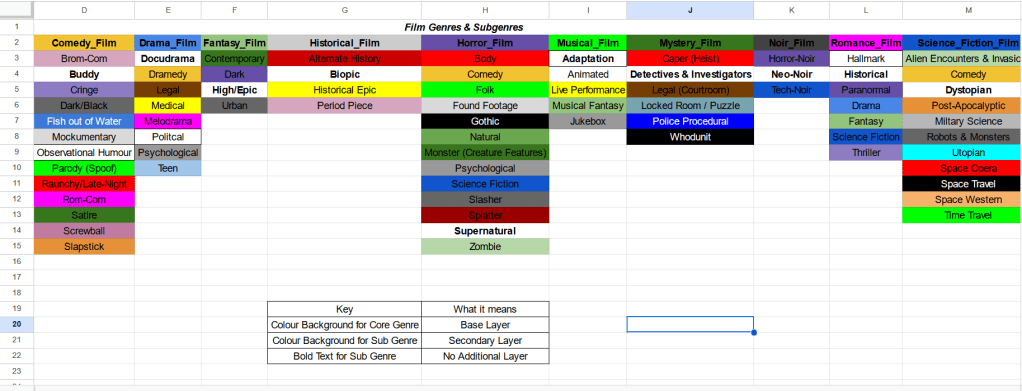
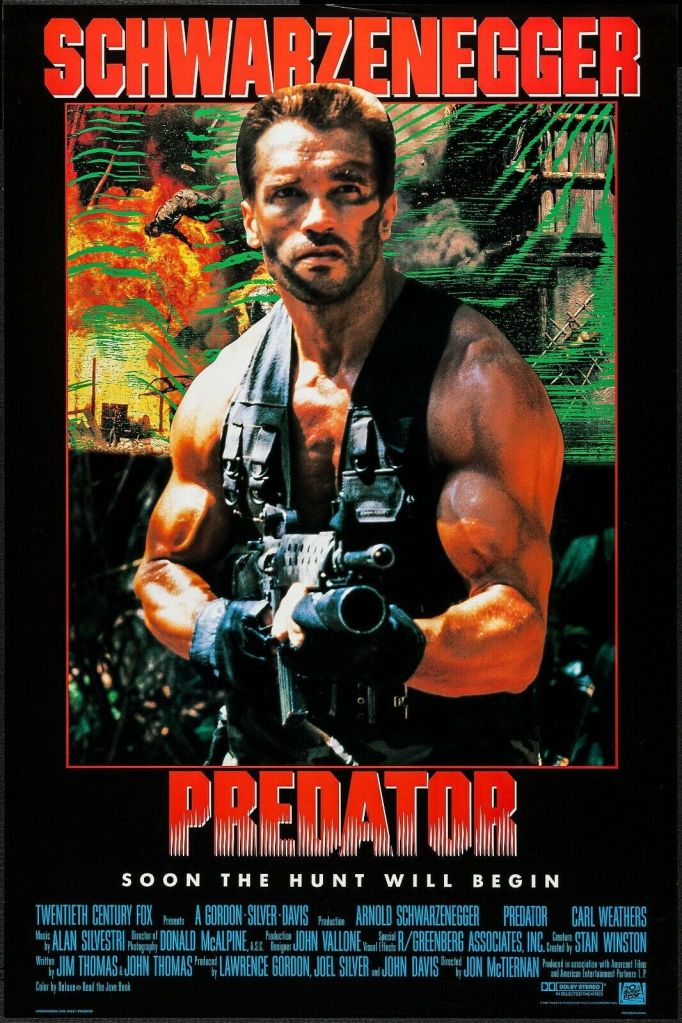
With all of this research conducted, I now have a great base to both strengthen my understanding of narrative and build upon the application that this research can produce. I hope to expand the limits of what I have looked at by analysing the details of the visual media used to showcase narratives, such as posters, book covers and box art, to see what elements stand out as well as what patterns I can recognise within a genre. For example, I have noted that films existing within the action genre tend to have a lot more bolder design choices when it comes to how they want their story to be perceived. This usually involves a strong use of bold stylised fonts, a liberal use of vibrant red as well as a prominent showcase of the main character, typically shown in a dynamic pose. A proper example of these choices can be seen in the posters for Predator (1987) as seen below.
Chapter 3 – Confirmative Praxis
Now that the main projects embodying experimentation and research had been completed, it was time to take what I had learnt from both aspects and mould them into a final piece that represents a culmination of my entire artistic process. In this chapter, I will be exploring all of the roads that led me to the creation of my final piece whilst discussing all the new elements that helped drive my inspiration.
Research Expansion
As there was a large gap between this module and the last, I had a lot of time to look back through my research and see what I could expand upon to help create a starting point for what I could achieve once this module had started. I decided to dive deeper into the genre research I conducted and added to my ever-expanding glossary the genres that exist within the mediums of literature and video games. Most notably, I found myself drawn to how expansive the genres within speculative fiction can be, particularly within the horror genre due to all the ways it can evoke fear within the reader since “horror often mercifully paralyses memory.” (Lovecraft, 2014). I hope that with this broadening of my understanding of genre, I can apply it to my own narrative concepts to structure and categorise them accordingly. I aspire to one day create works that would inspire their own subgenre, much like how the works of H.P. Lovecraft inspired the subgenre of Cosmic Horror otherwise known as Lovecraftian Horror.

At the end of the last module, a key piece of advice I was given was to study the anatomy of animals to help build up an understanding that I can apply to create obscure silhouettes and builds for my characters. I never could grasp the human anatomy which is why I liked to be loose and abstract with the proportions of the things I draw, but being able to just have fun with creature anatomy was a fun exercise to get out of my perfectionist brain. Salvador Dali (1990) once said that refusing to study anatomy was a sign of laziness, and now that I have more respect for the use of anatomy in my work I can say that I agree with this statement. These anatomy studies helped me kickstart my idea process in what I wanted to pursue for my final piece. However, after creating the concept I inevitably developed to become my final piece I decided to set this concept aside as the passion for my chosen story was far greater.
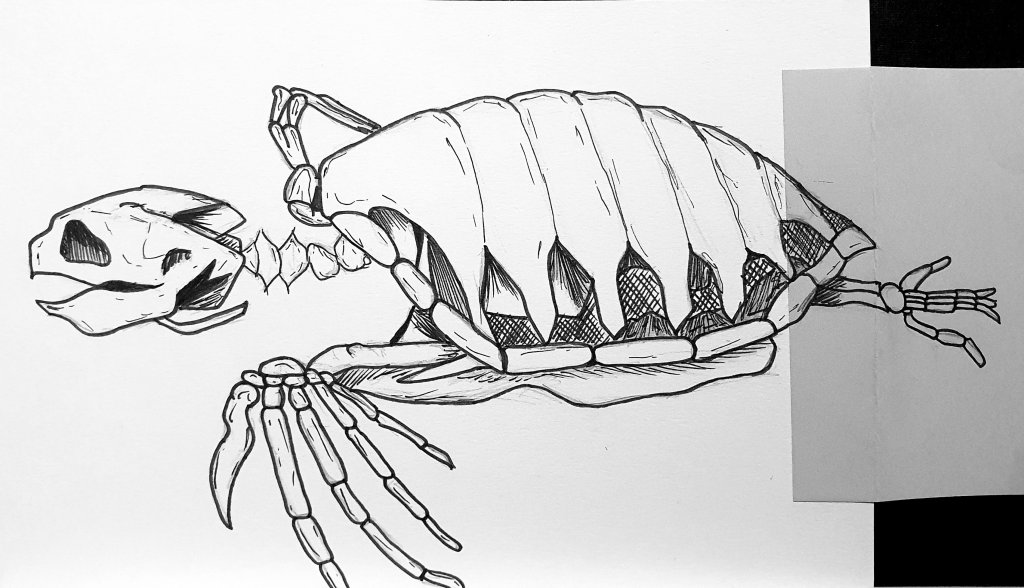
After going through the research I wanted to expand upon, I knew that I had to go into this new module with at least some inkling of what I wanted to try and create. Rather than ending up with another chaotic list of concepts, I managed to stop myself at two but only because I fell in love with the second concept so much. It had all of the aspects that I wanted to showcase about myself as an artist but it also had the potential of pushing my skills to create something I never had before. Since I knew that I wanted to progress forward, I needed to make sure that my values stayed true since “if you compromise your core values, you go nowhere.” (Bennett, 2016). Therefore, I knew that this final piece would have a story be the prominent focus while also having limited 3D aspects, showcasing my evolution from a maker into a storymaker.
Exploring New Research
I already knew the bulk of what I wanted my story to be as well as the use of animation I wanted to use to make it come to life. However, there were some stylistic choices I was still looking to consider so I started looking for some points of inspiration. As the protagonist was going to be quite expressionless and on a sorrowful journey, I wanted to find aspects that helped bring light to the “beauty in the imperfection.” (Newman, 2023). That is why when it came to the design of the protagonist, I opted to combine the mediums of Basel Masks, neutral masks used in movement performances, and Kintsugi, a Japanese art of repairing broken pottery with valuable metals like silver and gold. With these two combined, I was able to design a focal piece for the character that allowed me to showcase their past elegantly through the evolution of their mask in the final piece.

When it comes to my process as a maker, the use of repetition comes naturally to my way of life rather than a practice I have learnt or adapted from study. Due to my autistic mind, I can perceive repetition as a form of catharsis rather than a menial way of working. When it came to looking into artists I found myself naturally drawn to the works of Antony Gormley, a British sculptor who can construct multiples to fill an entire room. Gormley (2023) discusses the potential of art and how it is defined to change things and if it is immediately acceptable it would not be doing the job, which speaks to my process of expanding my work outside the boundary and pushing the limits of what I can create. I also found the same qualities in the work of Marc Bourlier, a French contemporary sculptor who works with eroded materials to create multiple-based art most known for the vast use of odd facial expressions.
With all these influences in mind, I took it upon myself to advance my repetitive process a step further in this project by giving each ghost its unique personality. Rather than making the same form over and over again, I allowed myself to experiment with various facial expressions to allow each ghost to be an individual except for a few duplicates much like the vacant faces in the works of Marc Bourlier seen below. This practice also had a bearing on the story used in my final piece as I allowed for the looks of the ghosts to shift within the story. For example, the ghosts made in the earlier stages of the protagonist’s life had more joyous expressions but as the character’s psyche began to shift down a darker path, the appearance of the ghosts would become more sinister and twisted.

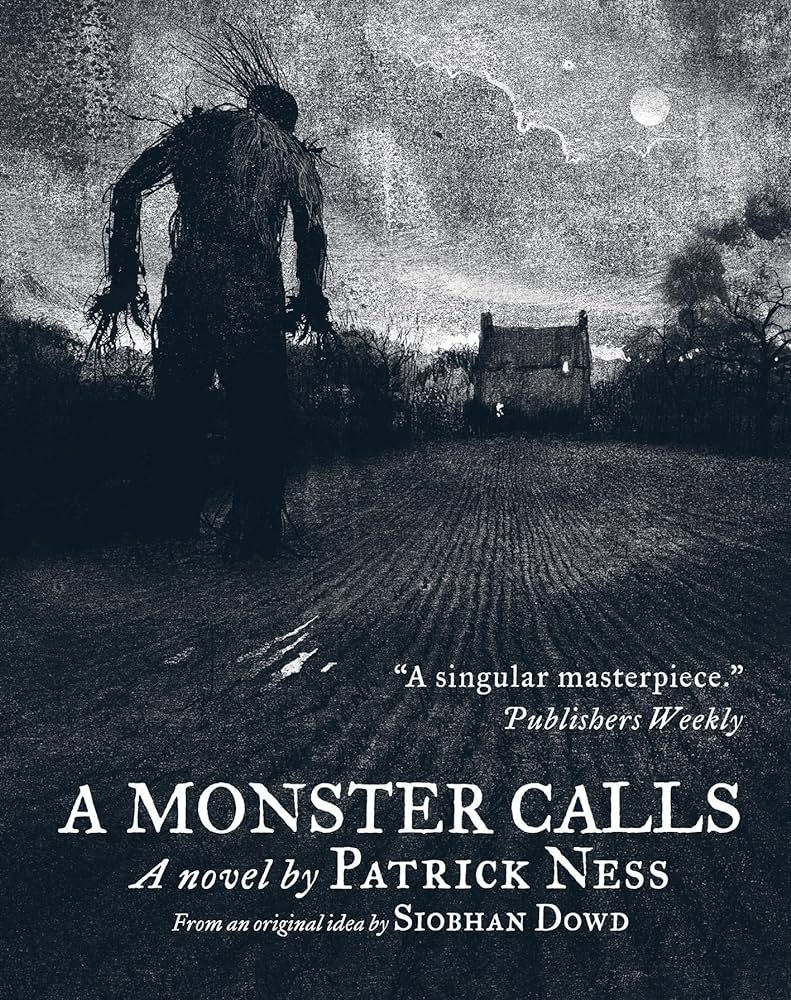
Since I wanted my story to be the central focus of this project I knew that I needed to look into literature examples, as well as artists, to help round out my comprehension to write about the themes I wanted to tackle. I wanted my story to talk about grief and the negative impacts of bottling up emotions, so I looked into books that talked about these themes within a narrative format rather than the self-help structure that most grief-related books are made in. The main story that I found myself most inspired by was A Monster Calls (2011) by Patrick Ness, which is centred around the protagonist coming to terms with the inevitable loss of their parent. The narrative for my final piece would go through similar events but also look into how the protagonist evolved once their parent died, leading into an unfiltered way of life within societal norms as “without a filter, a man is just chaos walking.” (Ness, 2014).
Making the Animation
Before this project, I had zero experience in the practice of animation. I had a strong love for the technique but knew it would be perfect for me as it is an exemplary combination of both repetitive process and illustration. Since I wanted to pursue this and did not have the knowledge of how to do it, I went forth head first and taught myself step by step to the best of my ability “For the things we have to learn before we can do them, we learn by doing them” (Aristotle, 2014). If I had known then what I know now, I would not have changed a thing about how I processed this technique as guiding myself through all the hardships has strengthened me as both an artist and a person.

When it came to the process of the animation, I knew that attempting to try and learn how to use software that I was not comfortable with would end up causing more problems than solutions. I wanted to use animation as a way to convey both life and emotion rather than the drawings just being stagnant as “animation is about creating the illusion of life.” (Barlaas, 2020). Therefore, I chose to create it within Google Sheets as I was experienced with all of the elements within the program, as well as giving me the tools to create a soft touch animation style that allowed the illustrations to fade in and out as if they were breathing on a page. Although this gave me a process that I am proud of and would use again, I would not recommend this technique to people of low patience as it is incredibly tricky to format text in an animated storybook layout. To combat this problem, I had to realign the text boxes themselves to become jigsaw pieces that would combine to create my ideal outcome.

Now that all of the animation and illustration were put in place, the final touches to figure out were both the style of the text and the actual text itself. As I knew from my genre research that a lot about the story can be subconsciously projected by the way it looks, I wanted the text to have a personality of its own rather than be too bookish. It took a lot of time to go through a lot of font styles but I settled upon one that best matched the monochrome style of my illustrations but also held a charming personality that could shift depending on the tone told within the story. Overall when all of the pieces began putting themselves into place, I came out of the end of this project with a piece that best summarised myself as an artist.

Conclusion
In conclusion, through this course, I have managed to teach myself a plethora of skills and techniques that have built upon my pre-existing ones taught to me within my BA degree. Further research would involve a deeper look into character dynamics which would involve an extensive examination of stock characters and which pairings tend to either clash or complement one another. This analysis of traits and relations would allow for a better understanding of how characters interact as well as help create a catalyst of emotion to capture a connection to the reader. In regards to the varying avenues of research and experimentation that I explored throughout this course, I hope to further develop everything that I have looked into as well as the pathways that I did not get a chance to go down. If I allow myself to pursue more knowledge in both genres and mediums of which you can tell a story, it will indefinitely cause my comprehension of storytelling to thrive and birth new ideas and concepts. Now that I have granted my passions in both narratives and making to continue evolving, I can now say confidently that I am a ‘Storymaker’, an artist who has the freedom to explore multiple mediums in creatively innovative ways, whilst also striving to find new techniques for stories to be told for generations to come.
Bibliography
Artwork
Banksy (2014) iPhone Addiction [Sketch]. Available at: https://www.cultofmac.com/293535/banksys-latest-sketch-terrifying-reminder-iphone-addiction/?utm_source=pinterest&utm_medium=social#WJedm5grhG8QUQBf.32 (Accessed: 10th December 2023).
CD Projekt (2020) Cyberpunk 2077 Cityscape (Screenshot). Available at: https://www.cyberpunk.net/gb/en/ (Accessed: 10th December 2023).
Champeny, K. (2021) Still Defiant [Mosaic]. Available at: https://www.kevinchampeny.com/still-defiant (Accessed 10th December 2023).
Giauque, E. (1931) Elements: Threads in Space [Installation]. Available at: http://www.thevitrine.com/inspirationblog/2017/2/16/threads-in-space (Accessed: 9th December 2023).
Jones, I. (2020) Wild Goats taking to the quiet streets of Llandudno [Photograph]. Available at: https://www.weforum.org/agenda/2020/04/covid-19-cities-lockdown-animals-goats-boar-monkeys-zoo/ (Accessed: 10th December 2023).
Maria De Nittis, G, (2022) Nietzsche painting God is Dead Art Print [Art Print]. Available at: https://pixels.com/featured/nietzsche-painting-god-is-dead-gian-maria-de-nittis.html?product=art-print (Accessed: 8th December 2023).
Mathias, S. (2022) Constructed Timeline [Illustration].
Mathias, S. (2020) Experimentation through Making [Craft]. Available at: https://samuelmathias.art/technical-portfolio/ (Accessed: 9th December 2023).
Mathias, S. (2019) Multisensory Texture Doll [Sculpture]. Available at: https://samuelmathias.art/digital-portfolio/ (Accessed: 10th December 2023).
Mathias, S. (2016) Portraits of Emotion [Illustration].
Mathias, S. (2022) The Joy of Repetition [Installation]. Available at: https://samuelmathias.art/digital-portfolio/ (Accessed: 9th December 2023).
Mattingly, M. (2012) Floating a Boulder [Photograph]. Available at: https://artsandculture.google.com/asset/floating-a-boulder-mary-mattingly/VwHp_WPOJlm-TA?hl=en (Accessed: 10th December 2023).
Michelangelo (1512) The Creation of Adam [Painting]. Available at: https://m.museivaticani.va/content/museivaticani-mobile/en/collezioni/musei/cappella-sistina/volta/storie-centrali/creazione-di-adamo.html (Accessed: 8th December 2023).
National Archives (1945) Atomic Bomb Cloud over Hiroshima [Photograph]. Available at: https://www.atomicarchive.com/media/photographs/hiroshima/mushroom-cloud.html (Accessed 9th December 2023).
Picasso, P. (1925) Le Baiser (The Kiss) [Painting]. Available at: https://focusonpicasso.com/product/le-baiser-the-kiss-2/ (Accessed: 9th December 2023).
Vintiner, D. (2020) Bionic Arm [Photograph]. Available at: https://edition.cnn.com/style/article/david-vintiner-transhumanism/index.html (Accessed at: 10th December 2023).
Books
Aristotle and Tredennick, H. (2004) The Nicomachean Ethics. London: Penguin Classics
Backman, F. (2014) A Man Called Ove. New York: Atria Books.
Baudrillard, J. (1998) The Consumer Society: Myths and Structures. London: SAGE Publications.
Bennett, R. (2016) The Light in the Heart. United States: Roy Bennett
Berman, M. (1983) All That Is Solid Melts Into Air: The Experience of Modernity. London: Verso.
Bird Rose, D., Van Dooren, T. and Chrulew, M. (2017) Extinction Studies: Stories of Time, Death and Generations. United States: Columbia University Press.
Black, H. and DiTerlizzi, T. (2003) The Spiderwick Chronicles: The Field Guide. New York: Simon & Schuster
Booker, C. (2004) The Seven Basic Plots: Why We Tell Stories. United States: Bloomsbury Academic.
Braidotti, R. (2018) Posthuman Ecologies: Complexity and Process after Deleuze. United Kingdom: Rowman & Littlefield International.
Braidotti, R. (2021) Posthuman Feminism. New Jersey: Wiley.
Braidotti, R. (2019) Posthuman Knowledge. New Jersey: Wiley.
Braidotti R. (2013) The Posthuman. Cambridge: Polity Press.
Braidotti R. and Hlavajova, M. (2018) Posthuman Glossary. United States: Bloomsbury Academic.
Butler, C. (2002) Postmodernism: A Very Short Introduction. Oxford: Oxford University Press.
Butler, J. (2011) Gender Trouble: Feminism and the Subversion of Identity. United Kingdom: Taylor & Francis.
Campbell, J. and Mayers, B. (2011) The Power of Myth. New York: Bantam Doubleday Dell Publishing Group.
Camus, A. (1991) The Myth of Sisyphus and Other Essays. New York: Vintage Books.
Conrad, J. (2012) Heart of Darkness. New York: Penguin Books.
Dali, S. (1990) Diary of a Genius. United Kingdom: Hutchinson
Debord, G. (1995) The Society of the Spectacle. Princeton: Zone Books.
Descartes, R. (1637) Discourse on Method. Leiden: Descartes.
Deleuze, G. and Guatarri, F. (1987) A Thousand Plateaus: Capitalism and Schizophrenia. Minnesota: University of Minnesota Press.
Deleuze, G. and Guatarri, F. (2004) Anti-Oedipus. United States: Bloomsbury Academic.
Derrida J. (2016) Of Grammatology. United States: Johns Hopkins University Press.
Derrida, J. (2008) The Animal That Therefore I Am. United States: Fordham University Press.
Ettinger, B. (2006) The Matrixial Borderspace. Minnesota: University of Minnesota Press.
Ferrando, F. (2019) Philosophical Posthumanism. United Kingdom: Bloomsbury Academic.
Fukuyama, F. (1993) The End of History and the Last Man. United Kingdom: Penguin Books Limited.
Gibson, W. (2010) Zero History. New York: Viking Press.
Haraway D. (1985) A Cyborg Manifesto: Science, Technology and Socialist Feminism. United States: Socialist Review.
Haraway, D. (2013) Simians, Cyborgs and Women: The Reinvention of Nature. United Kingdom: Taylor & Francis.
Haraway, D. (2016) Staying with the Trouble: Making Kin in the Chthulucene. North Carolina: Duke University Press.
Haraway, D. (2008) When Species Meet. Minnesota: University of Minnesota Press.
Harvey, D. (1989) The Condition of Postmodernity: An Enquiry Into the Origins of Cultural Change. New Jersey: Wiley.
Hayles, N.K. (1999) How we become Posthuman: Virtual Bodies in Cybernetics, Literature, and Informatics. United States: University of Chicago Press.
Huxley, A. (1954) The Doors of Perception. London: Chatto & Windus.
Jameson, F. (2013) Postmodernism, Or The Cultural Logic of Late Capitalism. North Carolina: Duke University Press.
Kerr, J. (2003) Goodbye, Mog. New York: HarperCollins
Kirino, N. (2007) Grotesque. New York: Vintage Books.
Laist, R. (2013) Plants and Literature: Essays in Critical Plant Studies. Amsterdam: Editions Rodopi.
Latour, B. (2021) After Lockdown: Metamorphosis. Cambridge: Polity Press.
Latour, B. (2018) Down to Earth: Politics in the New Climate Regime. New Jersey: Wiley.
Latour, B. (2017) Facing Gaia: Eight lectures on the New Climate Regime. Cambridge: Polity Press.
Levi-Strauss, C. (1966) The Savage Mind. United States: University of Chicago Press.
Locke, J. (1894) An Essay Concerning Human Understanding. United Kingdom: Clarendon Press.
Locke, J. (1880) Some Thoughts Concerning Education. Cambridge: Cambridge University Press.
Locke, J. (1821) Two Treatises of Government. United Kingdom: Whitmore and Fenn and C. Brown.
Lotringer, S. and Cohen, S. (2001) French Theory in America. United Kingdom: Routledge.
Lovecraft, H.P. (2014) The Rats in the Walls. United States: Positronic Publishing.
Lyotard, J. (1984) The Postmodern Condition: A Report on Knowledge. Minnesota: University of Minnesota Press.
Marder, M. (2013) Plant-Thinking: A Philosophy of Vegetal Life. United States: Columbia University Press.
Marx, K. (1904) A Contribution to the Critique of Political Economy. London: International Library Publishing Company.
Marx, K. and J. O’Malley, J. (1970) Critique of Hegel’s Philosophy of Right. Cambridge, Cambridge University Press.
Ness, P. (2011) A Monster Calls. London: Walker Books
Ness, P. (2014) The Knife of Never Letting Go. United States: Candlewick Press.
Newman, C. (2023) We All Want Impossible Things. New York, Doubleday
Nietzche, F. (2020) God is Dead. God Remains Dead. And We Have Killed Him. United Kingdom: Penguin Books Limited.
Porter, M. (2015) Grief is the Thing with Feathers. London: Faber and Faber
Rosen, M. (2004) Sad Book. London: Walker Books
Snow, C.P. (2012) The Two Cultures. Cambridge: Cambridge University Press.
Still, J. (2015) Derrida and Other Animals: The Boundaries of The Human. Edinburgh: Edinburgh University Press.
Wolfe, C. (2010) What is Posthumanism? Minnesota: University of Minnesota Press.
Wolfe, C. (2003) Zoontologies: The Question of the Animal. Minnesota: University of Minnesota Press.
Conferences
Deleuze, G. (1987) ‘What is the Creative Act?’ Tuesday Lecture Series. FEMIS Film Foundation, 17th March. Paris: La Fémis.
Journals
Angelucci, D. (2019) ‘Cinema and Resistance.’ Deleuze and Guattari Studies, 13(4), pp. 567-579. DOI: https://doi.org/10.3366/dlgs.2019.0381.
Lippard, L. (1980) ‘Sweeping Exchanges: The Contribution of Feminism to the Art of the 1970s.’ Art Journal, 40(½), pp. 362-265. DOI: https://doi.org/10.2307/776601.
Woodward, K., Dixon, D.P. and Jones III, J.P. (2009) ‘Poststructuralism/Poststructuralist Geographies.’ International Encyclopedia of Human Geography, pp. 396-407. DOI: https://doi.org/10.1016/B978-008044910-4.00727-6.
Websites
Antoine Simon Fine Art Advisory (2020) Psychology of color: through the lens of mood and colour. Available at: https://antoinesimonfineart.com/insights/psychology-of-color-pablo-picasso (Accessed: 14th December 2023).
Barlaas, R. (2020) Into the world of animation. Available at: https://www.dawn.com/news/1569578 (Accessed: 14th December 2023).
Duignan, B. (2022) Postmodernism: Philosophy. Available at: https://www.britannica.com/topic/postmodernism-philosophy (Accessed: 9th December 2023).
Eller, K. (2022) Amanda Rowan: Place Setting. Available at: http://lenscratch.com/2022/05/amanda-rowan-place-setting-2/ (Accessed: 10th December 2023).
Gaiman, N. (2023) Journal. Available at: https://journal.neilgaiman.com/ (Accessed: 14th December 2023).
Gormley, A. (2023) Antony Gormley. Available at: https://www.antonygormley.com (Accessed: 14th December 2023).
Inktober (2023) F.A.Q. Available at: https://inktober.com/faq (Accessed: 14th December 2023).
Manly, L. (2023) ‘Yogi Berra on the Field: The Case for Baseball Greatness’, The New York Times, 8th May. Available at: https://www.nytimes.com/2023/05/08/movies/yogi-berra-documentary.html (Accessed: 14th December 2023).
Merriam Webster (2022) Bricolage. Available at: https://www.merriam-webster.com/dictionary/bricolage (Accessed: 10th December 2023).
Neon Dystopia (2015) What is Cyberpunk? Available at: https://www.neondystopia.com/what-is-cyberpunk/ (Accessed: 10th December 2023).
Ostberg, R. (2022) Transhumanism: Social and Philosophical movement. Available at: https://www.britannica.com/topic/transhumanism (Accessed: 10th December 2023).
Oxford Reference (2016) Alfred North Whitehead 1861-1947: English philosopher and mathematician. Available at: https://www.oxfordreference.com/display/10.1093/acref/9780191826719.001.0001/q-oro-ed4-00011471 (Accessed: 14th December 2023).
Oxford Reference (2022) Overview: grand narrative. Available at: https://www.oxfordreference.com/display/10.1093/oi/authority.20110803095903493 (Accessed: 8th December 2023).
Reedsyblog (2022) 12 Types of Characters Every Writer Should Know. Available at: https://blog.reedsy.com/types-of-characters/ (Accessed: 14th December 2023).
Riddell, C. (2023) Pages From My Sketchbook. Available at: https://chrisriddellblog.tumblr.com/ (Accessed: 14th December 2023).
Stanford Encyclopedia of Philosophy (2001) John Locke. Available at: https://plato.stanford.edu/entries/locke/ (Accessed: 9th December 2023).
Stanford Encyclopedia of Philosophy (2014) René Descartes. Available at: https://plato.stanford.edu/entries/descartes/ (Accessed: 8th December 2023).
Stanford Encyclopedia of Philosophy (2023) Thought Experiments. Available at: https://plato.stanford.edu/entries/thought-experiment/ (Accessed: 14th December 2023).
Turner. L (2015) Metamodernism: A Brief Introduction. Available at: http://www.metamodernism.com/2015/01/12/metamodernism-a-brief-introduction/ (Accessed: 10th December 2023).
UK Health Safety Agency (2022) COVID-19: epidemiology, virology and clinical features. Available at: https://www.gov.uk/government/publications/wuhan-novel-coronavirus-background-information/wuhan-novel-coronavirus-epidemiology-virology-and-clinical-features (Accessed: 10th December 2023).White, M. (2018) The Enlightenment. Available at: https://www.bl.uk/restoration-18th-century-literature/articles/the-enlightenment (Accessed: 8th December 2023).
List of Illustrations
Figure 1: Mathias, S. (2022) Manic List. [List].
Figure 2: Mathias, S. (2020) Map of Brain Exhibit. [Illustration].
Figure 3: Riddell, C. (2018) Mrs. Beat’em. [Illustration]. Available at: https://www.pinterest.co.uk/pin/914862407764264/ (Accessed: 19th December 2023).
Figure 4: DiTerlizzi, T. (2005) Common Ground Goblin. [Ilustration]. Available at: https://archive.org/details/arthur-spiderwicks-field-guide-to-the-fantastical-world-around-you/page/n95/mode/2up (Accessed: 19th December 2023).
Figure 5: Mathias, S. (2023) Inktober 2023 Day 31 – Fire. [Illustration]. Available at: https://samuelmathias.art/digital-portfolio/ (Accessed: 19th December 2023).
Figure 6: Mathias, S. (2022) The Invisible Entertainer. [Illustration]. Available at: https://samuelmathias.art/digital-portfolio/ (Accessed: 19th December 2023).
Figure 7: Rodriguez, V. (2014) Eating a Voting Ballot. [Performance Art]. Available at: https://www.pinterest.co.uk/pin/333759022397636274/ (Accessed: 19th December 2023).
Figure 8: Erichsen, J. (2019) Spaghetti Mayhem. [Performance Art]. Available at: https://www.pinterest.co.uk/pin/333759022397636182/ (Accessed: 19th December 2023).
Figure 9: Bing, H. (2000) Walking The Cabbage in Tiananmen. [Performance Art]. Available at: https://www.pinterest.co.uk/pin/333759022397638984/ (Accessed: 19th December 2023).
Figure 10: Mathias, S. (2022) The Thought Experiment: Practice Make-Believe Everywhere. [Performance Art].
Figure 11: Mathias. S. (2023) Shaping the Blob. [Illustration].
Figure 12: Mathias, S. (2023) The Squeaky Woman. [Illustration]. Available at: https://samuelmathias.art/technical-portfolio/ (Accessed: 19th December 2023).
Figure 13: Mathias, S. (2023) The Downfall of Polymer Clay. [Photograph].
Figure 14: Mathias, S. (2023) Character Archetype Diagram. [Diagram].
Figure 15: Neill, C. (2020) The Hero’s Journey Chart. [Diagram]. Available at: https://conorneill.com/2020/03/03/how-to-find-purpose-and-self-belief-the-heros-journey/ (Accessed: 19th December 2023).
Figure 16: Mathias, S. (2023) Film Poster Research – Slide 2. [Digital Collage].
Figure 17: Mathias, S. (2023) Colour Designation Chart. [Table].
Figure 18: Predator (1987) Predator. [Poster]. Available at: https://www.moviescore.com/movie/predator-%281987%29 (Accessed: 19th December 2023).
Figure 19: Encyclopædia Britannica (2023) H.P. Lovecraft. Available at: https://www.britannica.com/biography/H-P-Lovecraft (Accessed: 19th December 2023).
Figure 20: Mathias, S. (2023) Turtle Anatomy Study. [Illustration]. Available at: https://samuelmathias.art/technical-portfolio/ (Accessed: 19th December 2023).
Figure 21: The Maskery (2023) Basel and Neutral Masks. Available at: http://themaskery.com/masks-for-purchase/basel-masks/ (Accessed: 19th December 2023).
Figure 22: Bourlier, M. (2017) Driftwood Pieces [Installation]. Available at: https://www.pinterest.co.uk/pin/333759022400542383/ (Accessed: 19th December 2023).
Figure 23: Kay, J (2012) A Monster Calls. London: Walker Books, Cover, illus.
Figure 24: Mathias, S. (2023) Mouth Expression Studies. [Illustration].
Figure 25: Mathias, S. (2023) Main Character Design. [Illustration].
Figure 26: Mathias, S. (2023) The World’s Pettiest Thief. [Animation]. Available at: https://vimeo.com/895758555 (Accessed: 19th December 2023).

 Samuel Mathias