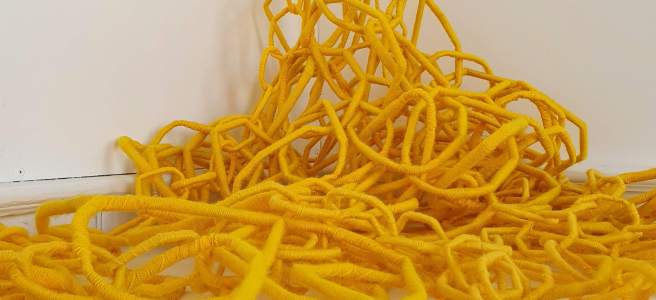
Hi all, and welcome to my Individual Major Project. In this post, I will be going through my design process as I start a project making first and conceptual thinking later. I will be discussing all the branches of research the concepts I explored before landing on the final idea and how I was consumed by making for the majority of this project.
Playing with Paper
When given the explanation of what this project was all about, I am going to be completely honest and say I wasn’t exactly all there when it was first explained. Due to it being an early morning after a long break after finishing a dissertation on top of a whole live brief project, you can understand why I would be a bit groggy and less astute about my surroundings. Although I was still listening to what was being said, I found it quite difficult to concentrate and kept distracting myself with scrap pieces of paper lying on my desk. Coincidentally, this led to being a great form of distraction as it allowed me to discover a new form of repetitive making which would inevitably become the basis of my making for this project.
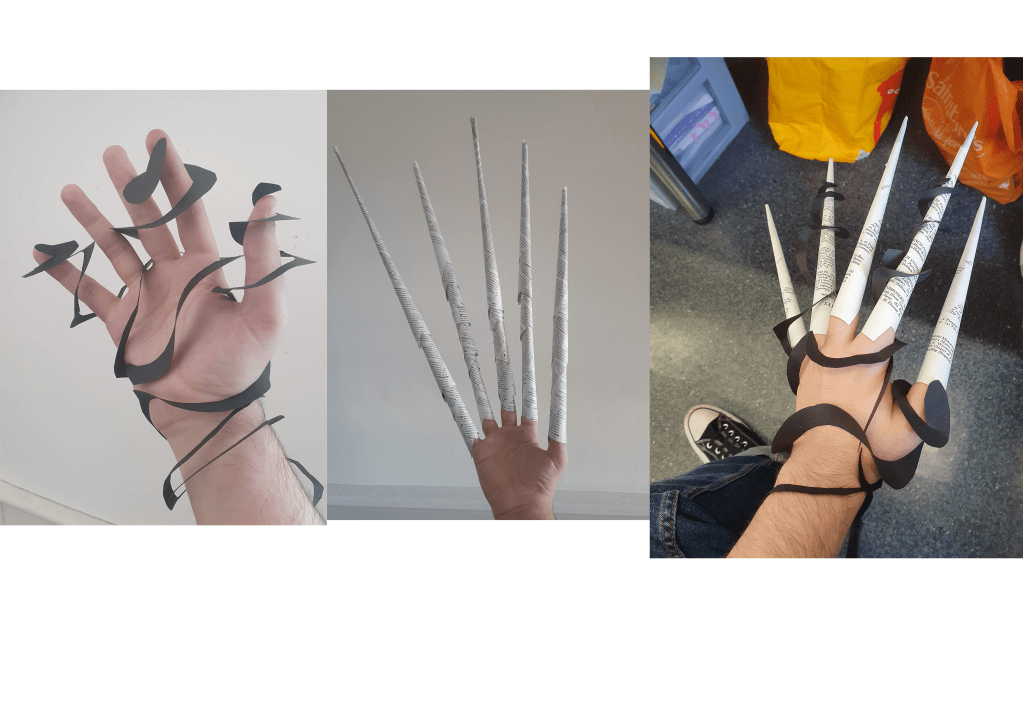
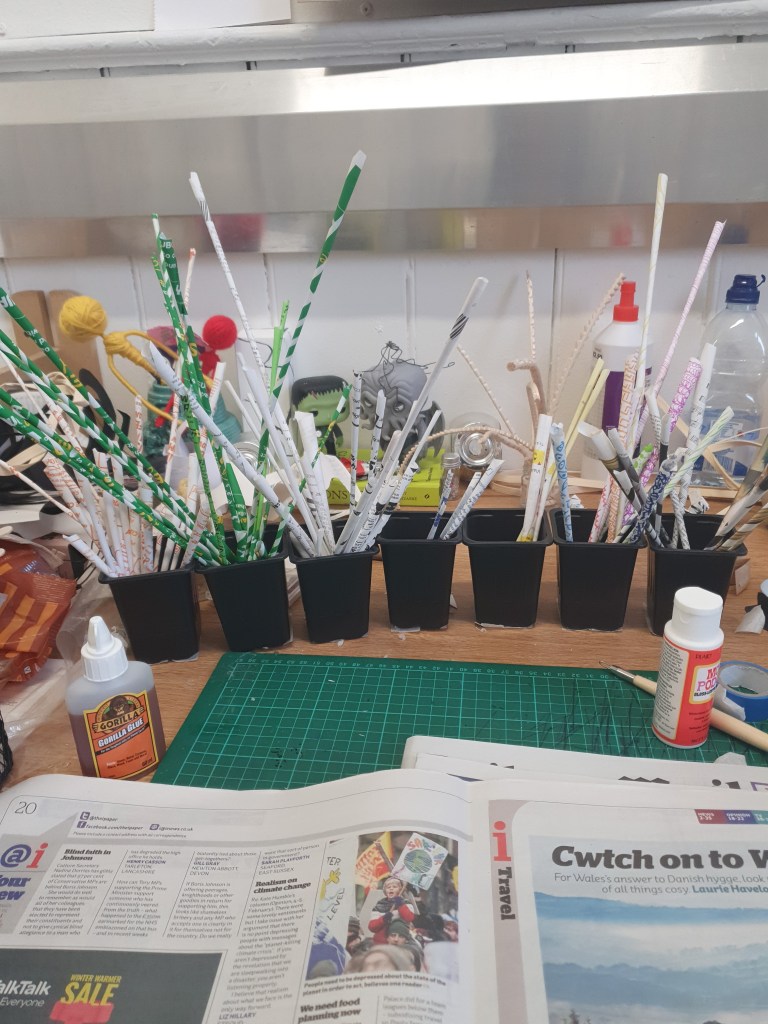
Essentially with the scrap pieces of paper, I would roll the paper up as tightly as I could to create slender straw-like quills. I experimented with this practice further by making both thick and thin styles that would stack in on themselves to make strange branch objects. Playfully I would wear them on my hand and enact several villainous gestures due to their sinister nature when worn at such a long length. I even combined the quills with other scrap pieces of cut paper and explored object anatomy by showcasing the objects in different ways on my hands.
In all of my experimentation with papers that went into the quills, I explored a variety of different papers but only 3 stood out the most
- Book Paper – Used to make the majority of my final work (All from the same book)
- Newspaper – Used to create a larger scale of Quill, allowing me to experiment with size
- Receipts – Used as a way to showcase colour (More in-depth discussion later)
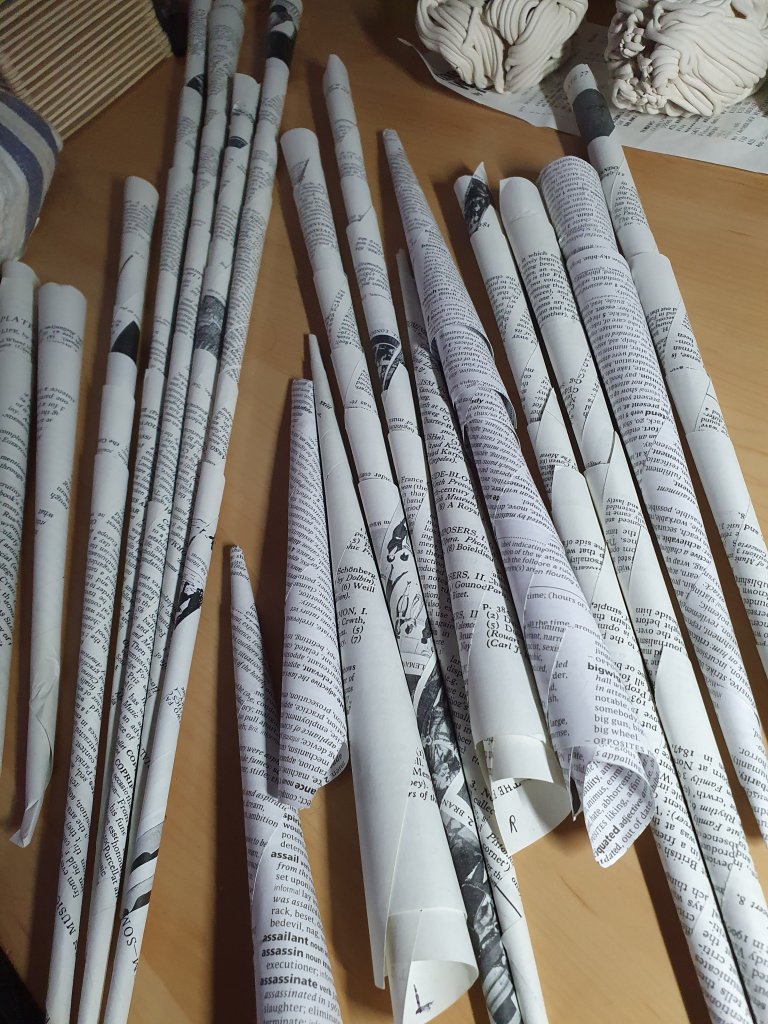
Reusing Receipts
In the end, I only really used Book Paper and Newspaper for my final piece but I felt that receipt paper needed its own explanation due to it being the starting point of my material exploration as well as the repetitive potential that this material had. Since the magpie project of year one, I have been collecting all kinds of materials so that if I wanted to explore a new kind of materiality, I wouldn’t have to look far. Originally I thought I would use the receipts more destructively, cutting them up into a variety of shards and shapes to be used in collage work. However, once I figured out the paper rolling technique, I jumped right into rolling up the receipts into quills of their own.
Positively, using receipts allowed me to gain a sense of how colour could play a part in the project as well as how the paper forms can be arranged. I put them into flower pots as a joke in the start since I ran out of jars I could put them into, but after sorting them in this way I had a flurry of botanically based themes surrounding the overgrowing nature of flowers and vibrant colours taking up space. However, the receipt quills themselves were quite flimsy and wouldn’t soak up the adhesive I was using (Mod Podge) as well as the other papers I was using. Not to mention rolling receipts this way has now seeped into my life outside of making, to the point that whenever I have a receipt in my hand I absentmindedly roll it into a quill anyway.
Idea Generation
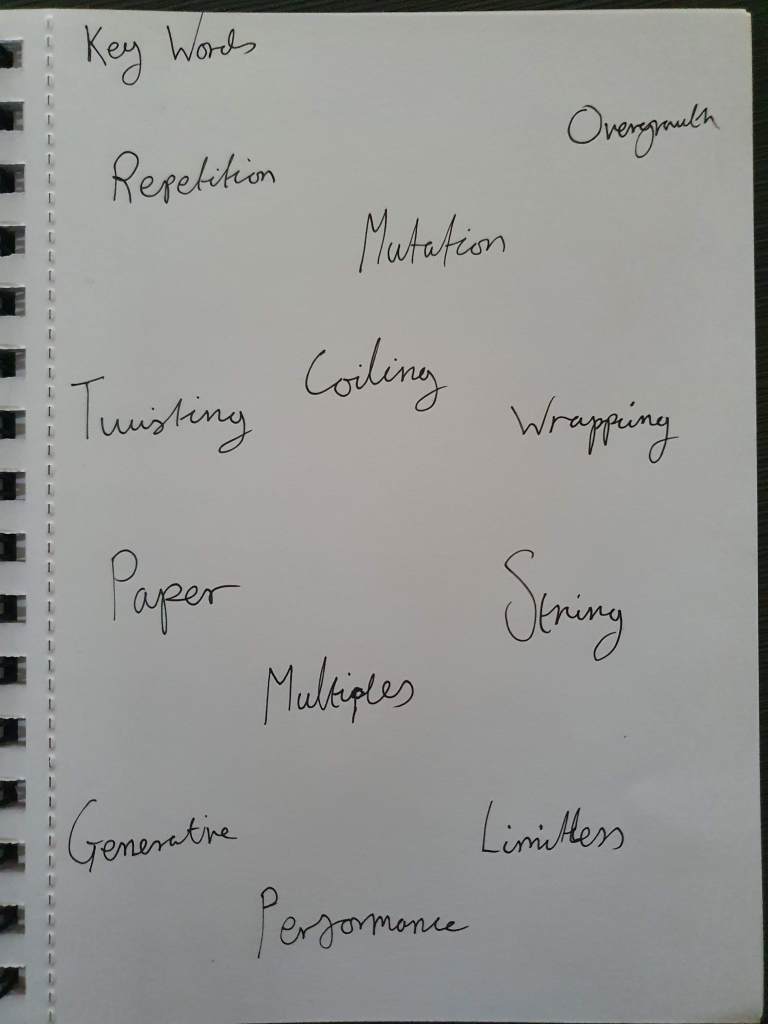
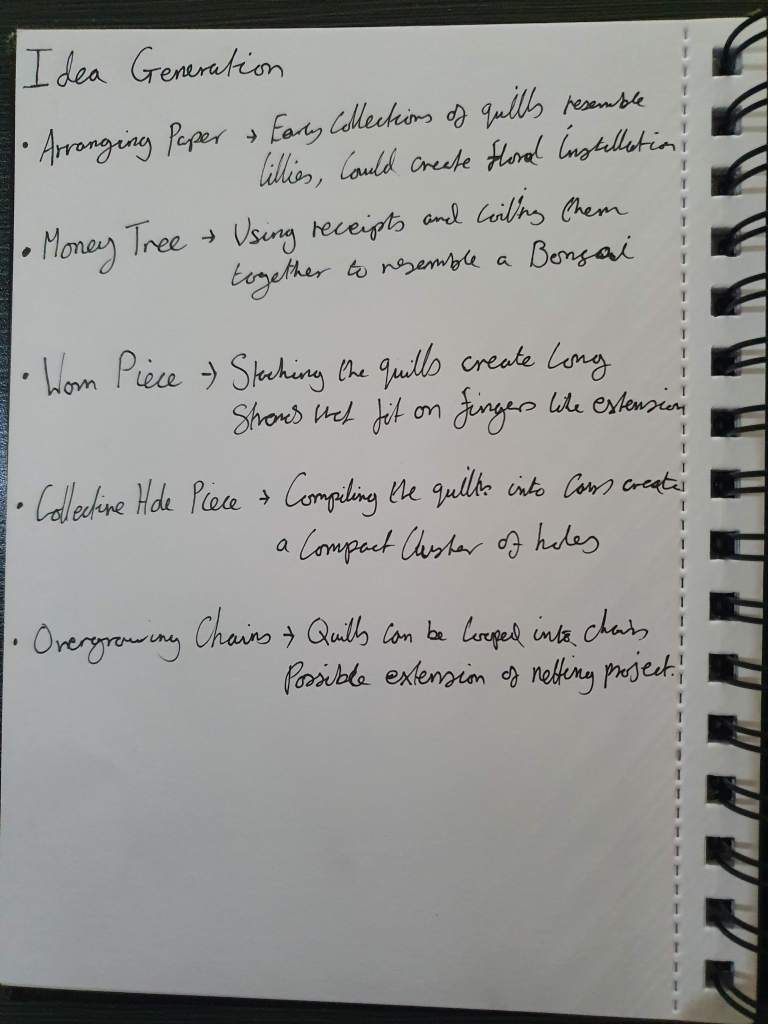
After a lot of making and experimentation, I realised I didn’t really know where this project was going due to starting the project by making it straight off the bat. Usually at the beginning of a project, I already have concepts and ideas to work towards through my making and experimentation. So to begin this process, I started by considering what kind of making I wanted to showcase and what my making could become. This ended up turning into a scramble of keywords relating to repetitive processes and a few concepts on what I could do with all of the paper quills I had been creating. I will be discussing these concepts in more detail later on in the presentation, but first, we’ve got to talk about my research into artists and aspects of repetition.
Artist Research
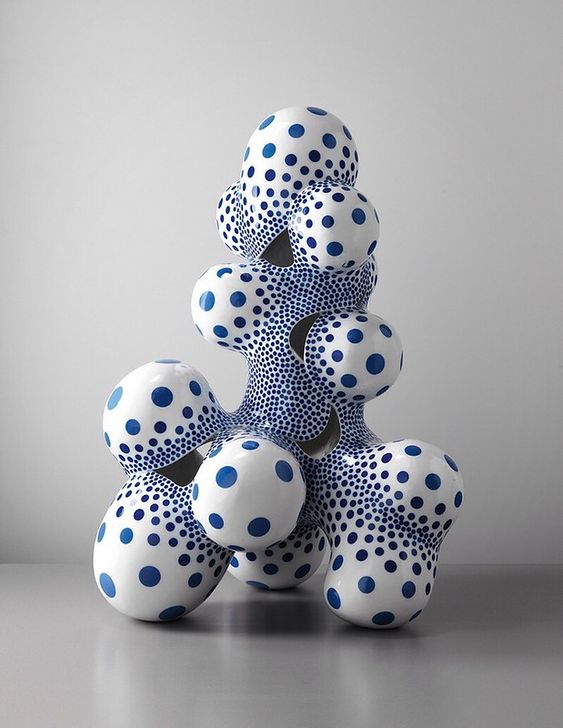
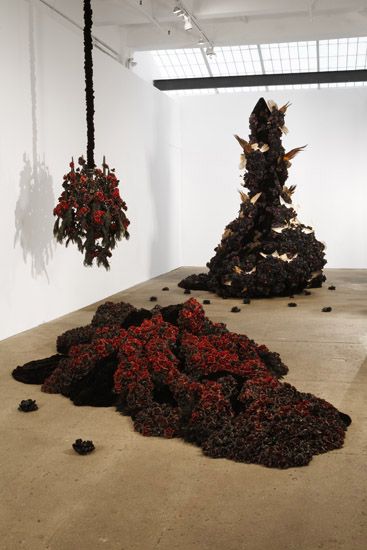
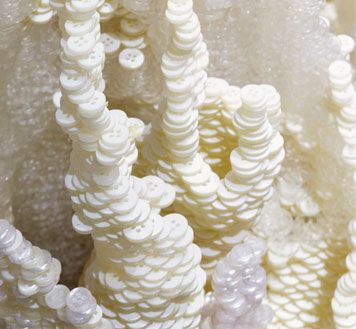
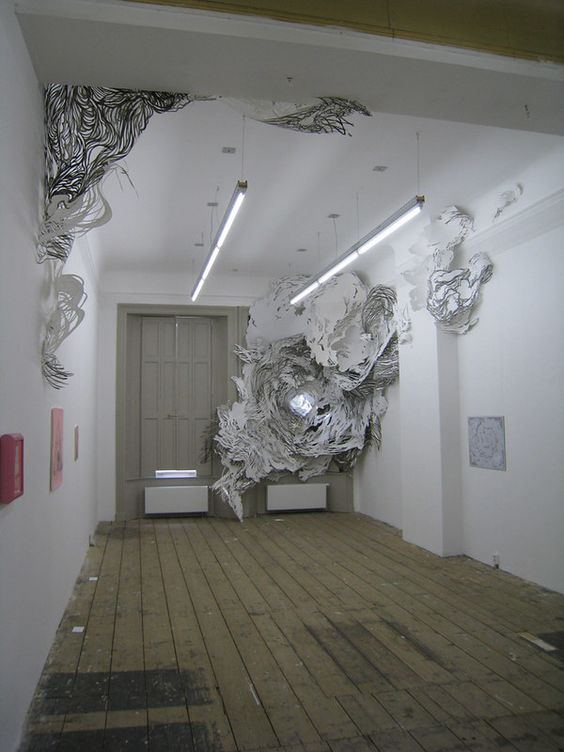
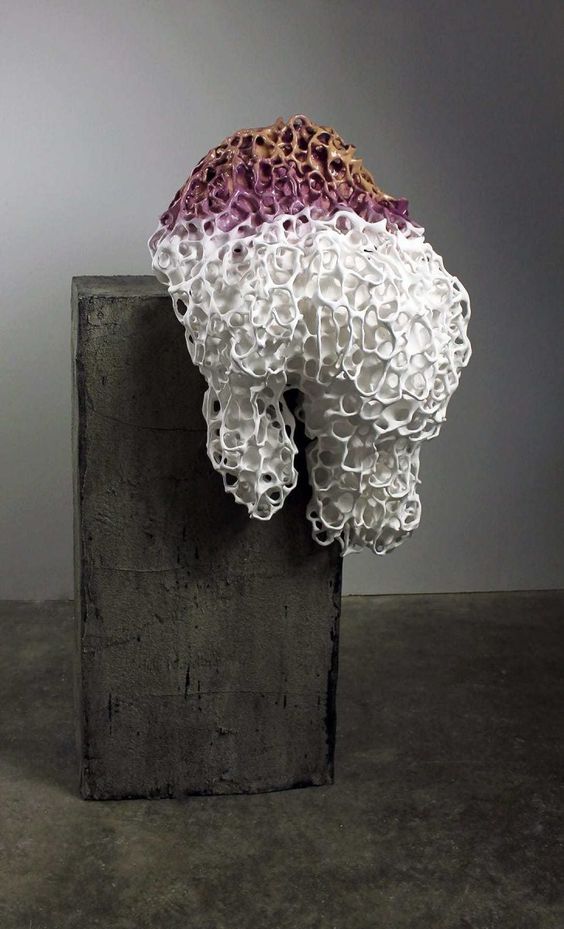
When first looking into artists, I already had ideas on what I imagined for my work. I knew that when it came to my final piece, I wanted it to be bigger than anything I had made before. I wanted the piece itself to grow and mutate on its own, swallow up space and just overwhelm the senses. In the past, I already knew of many artists who have large-scale repetitive work but I wanted to find new sources of inspiration to better help me perceive how this project would go. I found myself drawn to uniquely strange pieces that sort of had an otherworldly element to them, the way they would take up a space and look like they’ve just seeped into our reality really struck my creativity and inspired my making process from the beginning.
Artist Works Shown:
- Harumi Nakashima – Biomorphic Ceramic Sculptures
- Tara Donovan – Contemporary Button Sculpture
- Mia Pearlman – Cut-Paper Installation (Climate Pattern Imitation)
- Petah Coyne – Contemporary Sculptor
- Sara Catapano – Otherworldly Biomorphic Sculpture
All of the artists/inspirations that I looked into for this project can be found here.
Aspects of Repetition Research – Generative Art
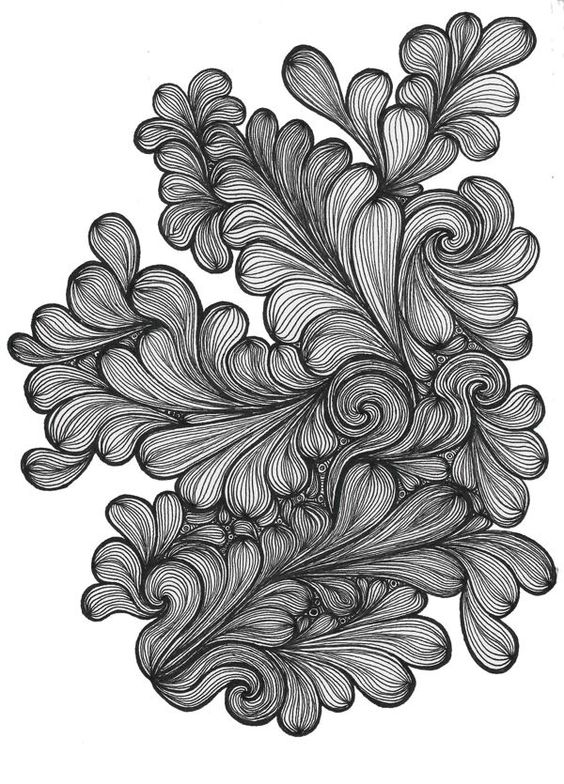
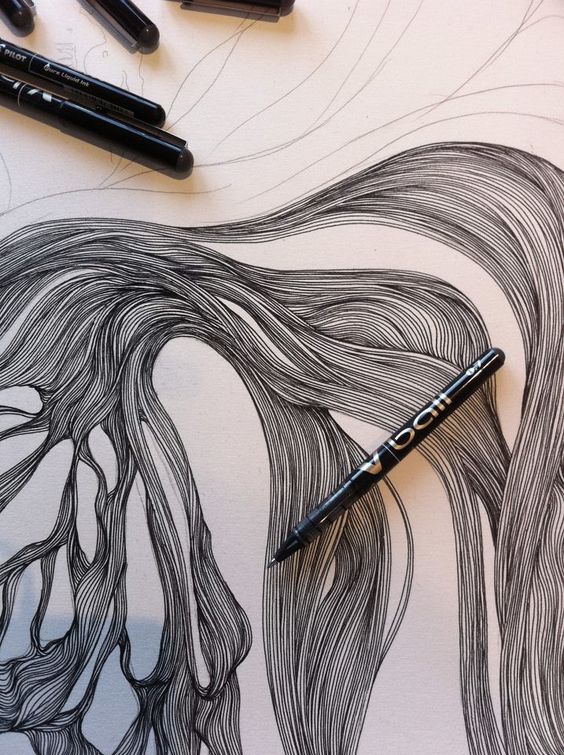
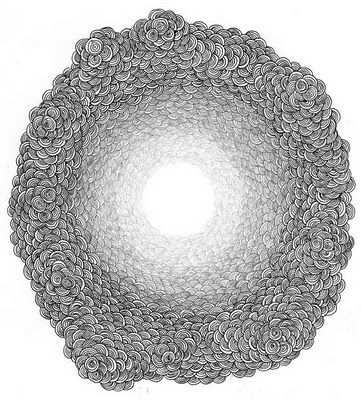
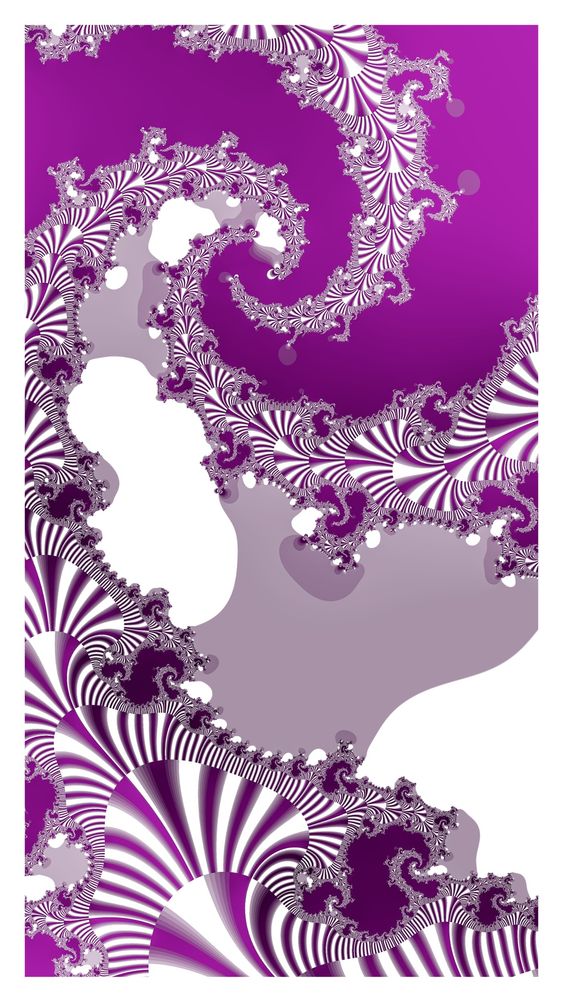
Since a lot of my work is based on repetition, I wanted my research for this project to look into aspects of repetition that I’ve never really looked at before. To start I looked at an interesting form of repetition called generative art which typically is used digitally but I was able to find a few works that achieved it in an illustrative medium. These obsessive forms of drawing that span from out of nowhere were the perfect visualisation of how something could spontaneously expand and multiply from nothing. An interesting form of multiples to look at.
Artist Works Shown:
- Lucia Paul – Illustrative Typography
- Gabriel Moreno – Untitled Illustration
- Stephanie Kubo – Ridiculously Obsessive Drawing
The Purple Piece is a Computer Generated Fractal Scape.
Aspects of Repetition Research – Mutation
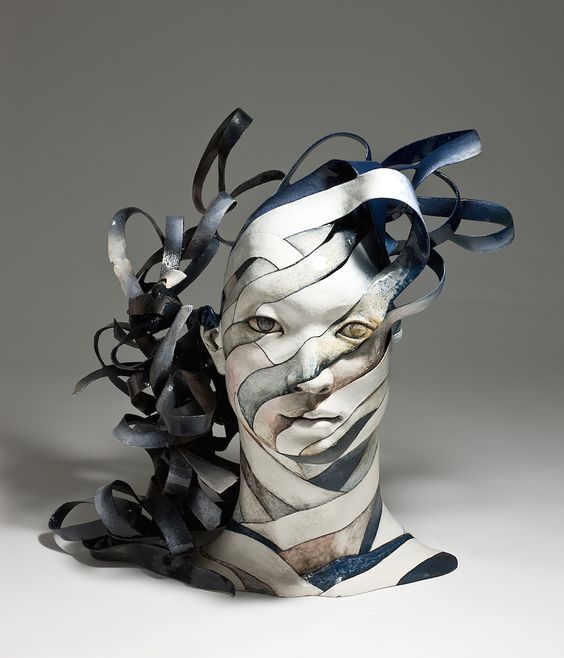
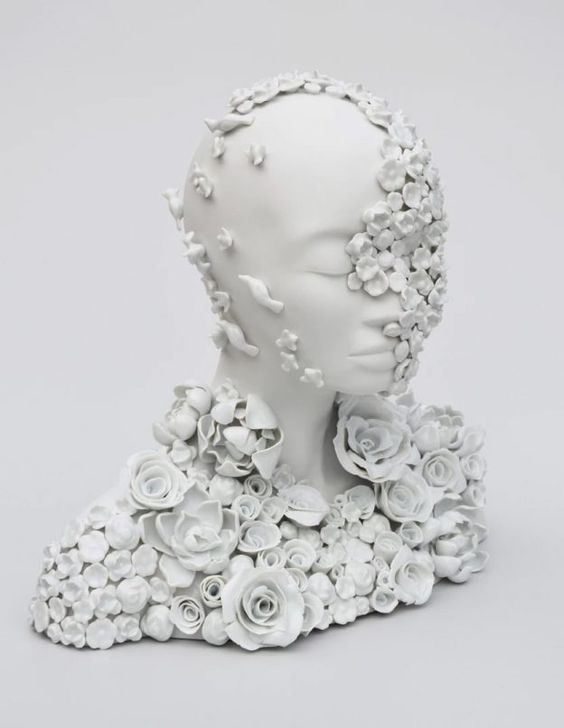
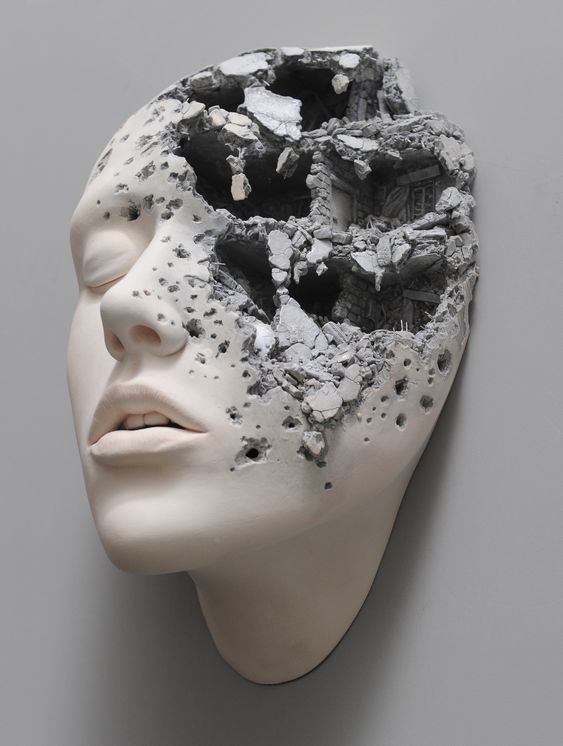
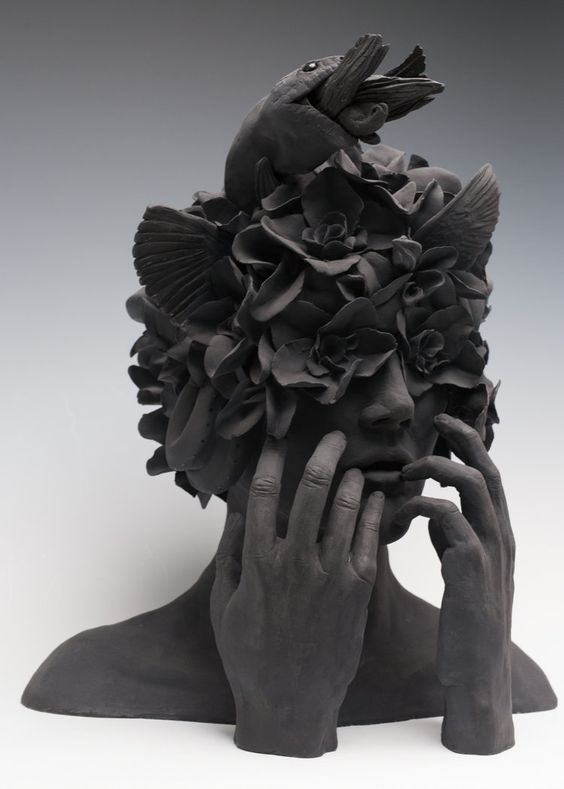
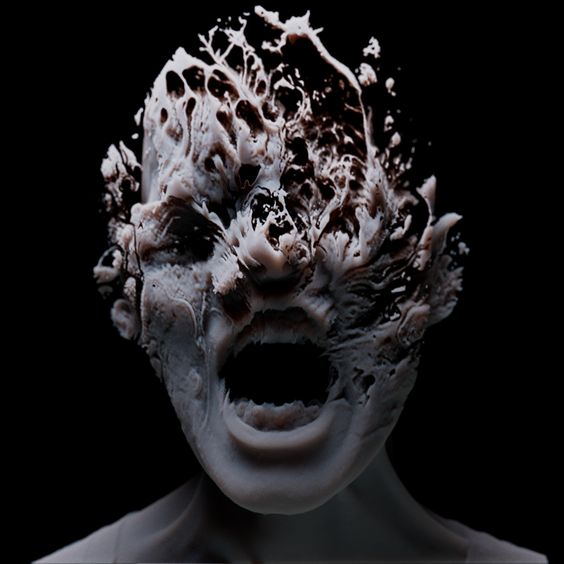
I then looked into the use of mutation in regards to shifting the form of someone’s appearance. Due to my love of using dark and horror-based narrative themes, I wanted to research transforming shapes and silhouettes to create a sinister being through making. The use of mutation in this way allowed me to think about my work from a performance perspective and helped me to develop concepts on how I can shift the perspective of how someone can appear.
Artist Works Shown:
- Haejin Lee – Ceramic Sculptures that Unravel Before Your Eyes
- Juliette Clovis – Porcelain Sculptures Merging Female Forms with Elements of Nature
- Johnson Tsang – Dream Worlds Imagined in Contorted Clay
- Kelly E. Mclaughlin – Dark Turn of Mind: Self Portrait
- Lee Griggs – Volume Displacement
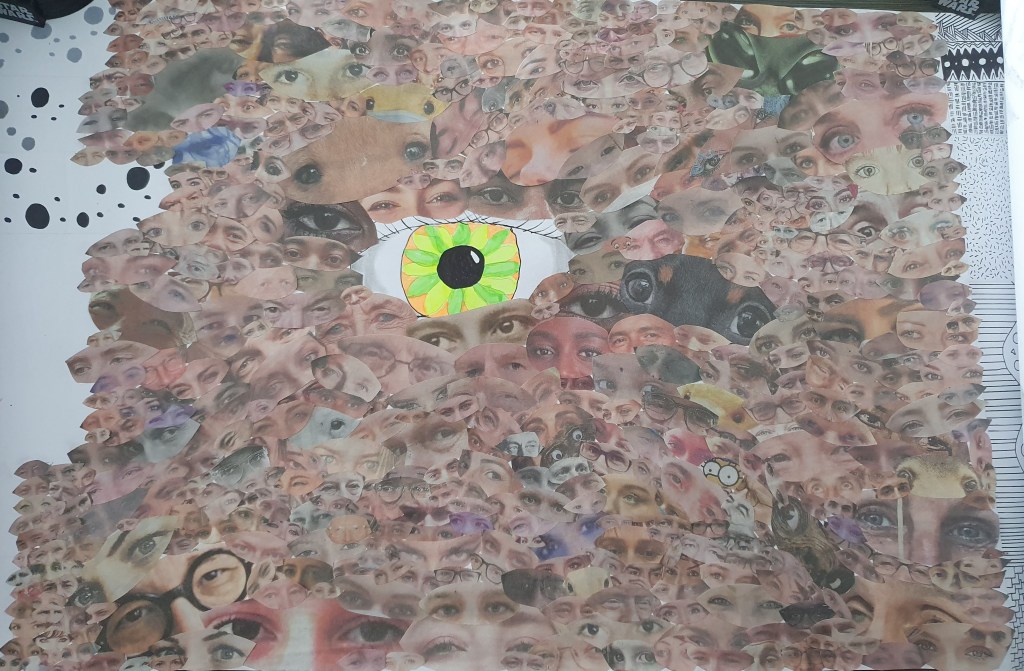
Aspects of Repetition Research – Eye Collage
I also looked into collage as a form of repetitive research due to when I normally work with paper, it tends to be based on cutting it into shapes and rearranging them to create new forms. However, I wanted this to have a more psychedelic strange atmosphere to it, which reminded me of a segment of collage I did back in 2020. When COVID was at its peak where everyone was wearing masks everywhere, I always felt that I was being watched whenever I left the house, which led me to create this collage of eyes as a way of symbolising the paranoia I felt in those trying times. Looking back made me realise that the overwhelming sense that I felt would be perfect for my work in this project, but rather than the sense being negative I would want the feeling to derive more from curiosity and wonder.

Worn Piece Research
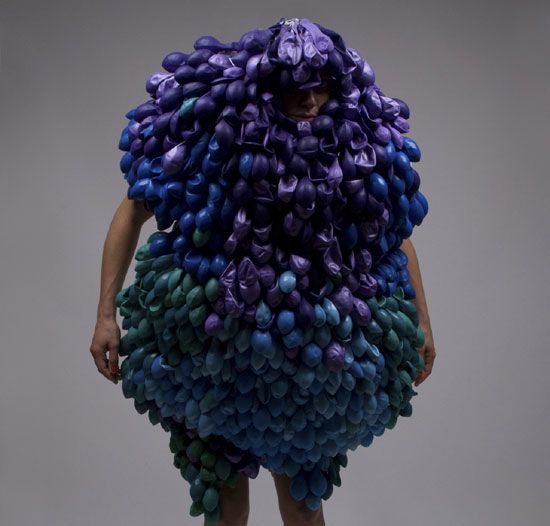
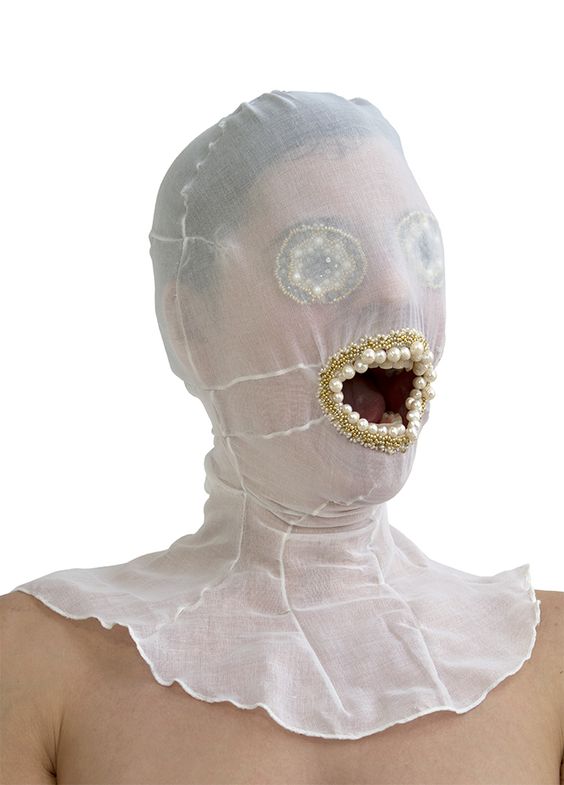
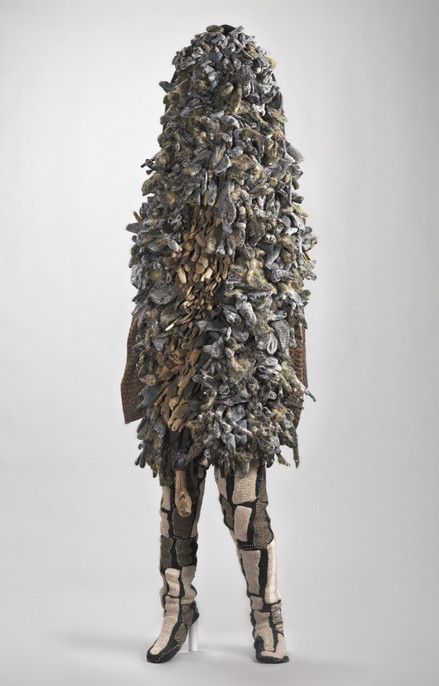
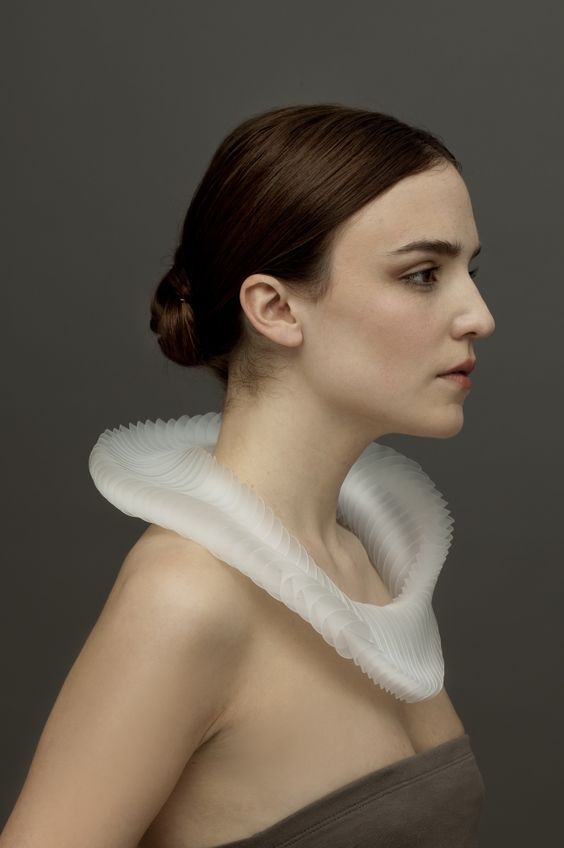
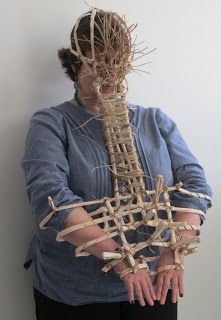
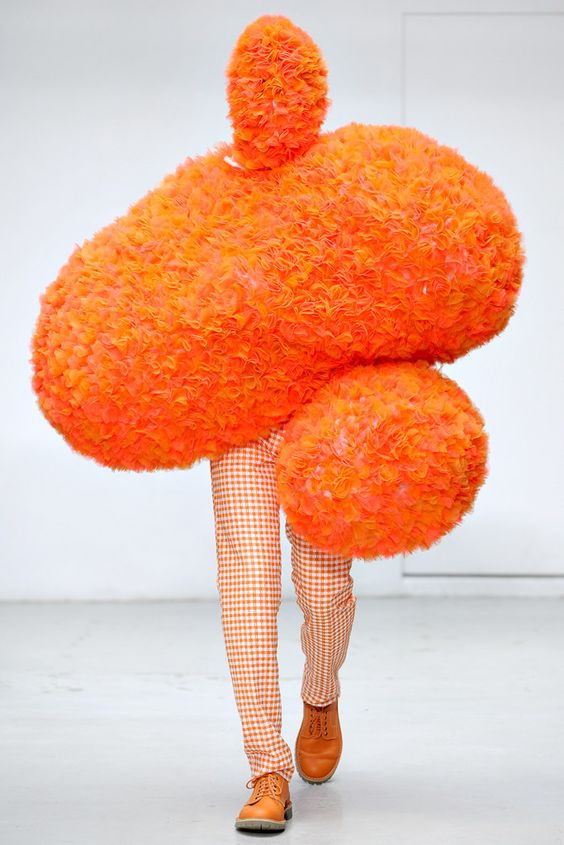
When considering performance as a part of the piece, I wanted to first look into various kinds of strange worn pieces of fashion. That way I could have some insight into what classifies as strange and fantastical when a piece is worn on the human body in ways outside of just jewellery. This led me on quite the extravagant journey of finding the most bizarre art pieces to be seen worn by actual people and I am in love with it all. If I ever end up characterising things into superhero personas as a future project, I will definitely be looking back at this research due to the magnificent pairing of Balloon Boy (1.) and Wotsit Man (6.).
Artist Works Shown:
- Bart Hess – Balloon Silhouette
- Rachel McKnight – Twisted Ruffle Neckpiece
- Caroline Broadhead – Skills in the Making Workshop
- Lauren Kalman – Composition with Ornament and Object
- Nick Cave – Soundsuit
- Walter Van Beirendonck – Vogue Menswear Fashion Show Spring 2012
Collect 2022
During this project, Collect ran its usual annual showcase where makers from all around the world exhibit pieces of their work to inevitably be sold. Sadly I was unable to see these pieces in person due to personal reasons, but thankfully the digital exhibition of the event allowed me to see all the pieces that were on display. Collect is always a great time for me especially during my research phase of a project as it never drops the ball in its beauty and ends up introducing me to a ton of new artists that I had never heard of before.
Artist Works Shown:
- Anna Ray – ‘Flamenco’ Textile Wall Installation
- Naomi McIntosh – Song: Sculptural Wall Piece
- Ikuko Iwamoto – Spoon
- Marianna Huotari – Eden’s Euphoria
- Tessa Eastman – Rosso Orange Cloud
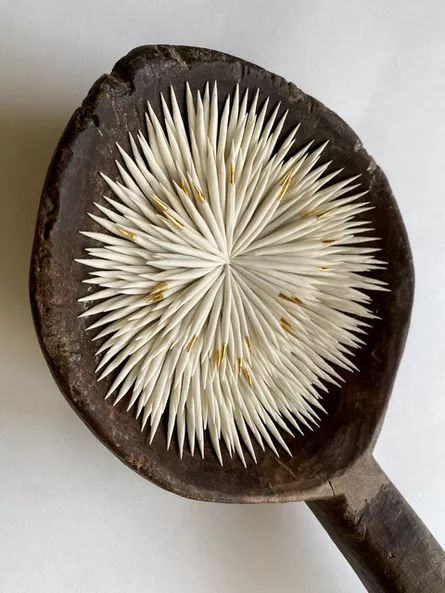
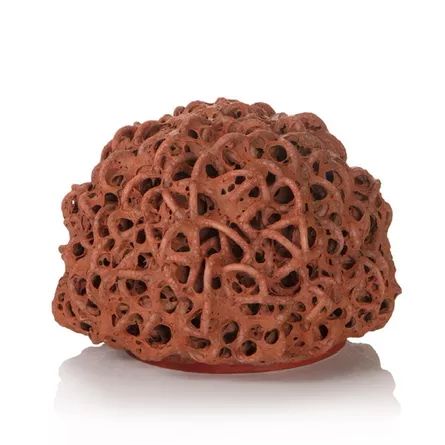

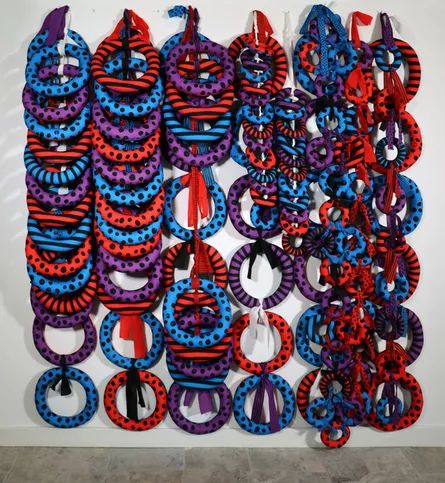
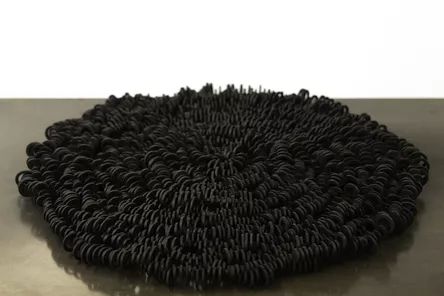
Going through Concepts – Paper Floral Arrangements
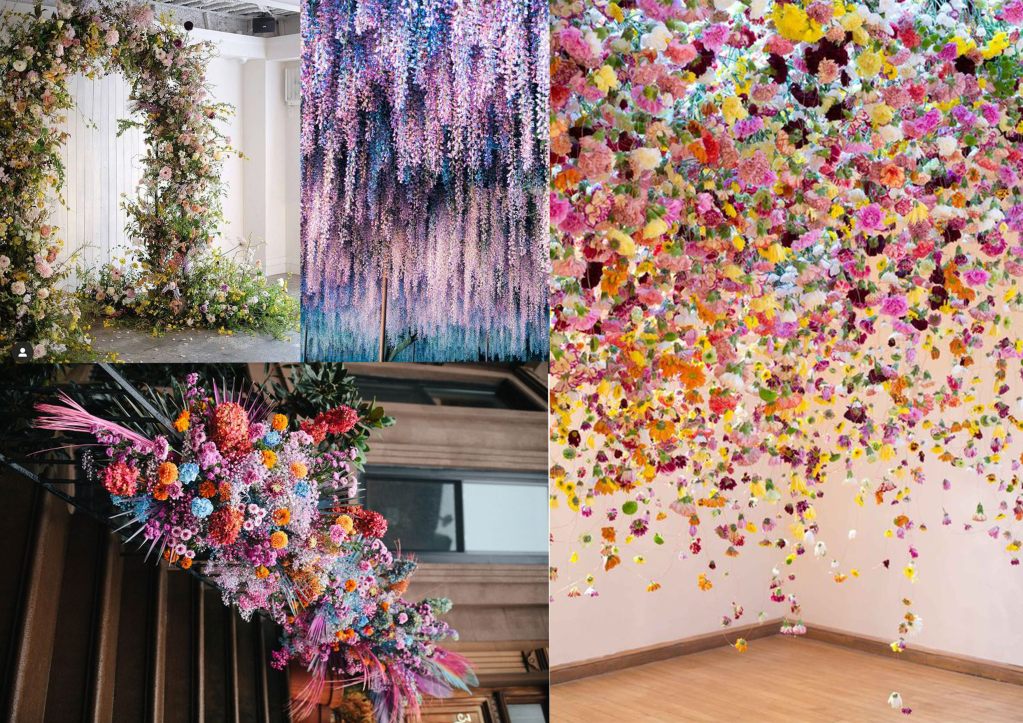
After I collated my research into various aspects of repetition, I tried to figure out what kind of pieces I could come up with to be my final piece. One of which was to fold and combine my paper quills to create bundles of different types of flowers, which would then multiply and take up a space like the pictures shown below. I like to think of this concept being a kind of maker seed-bombing of a room, where paper flowers would sprout up small but end up swallowing the space and becoming its own thing. Sadly combining the quills didn’t work out in the way I hoped so this concept was inevitably pushed aside but since I still have 100’s of receipts, I might end up just making a little botanical paper garden in the future.
Going through Concepts – Money Tree
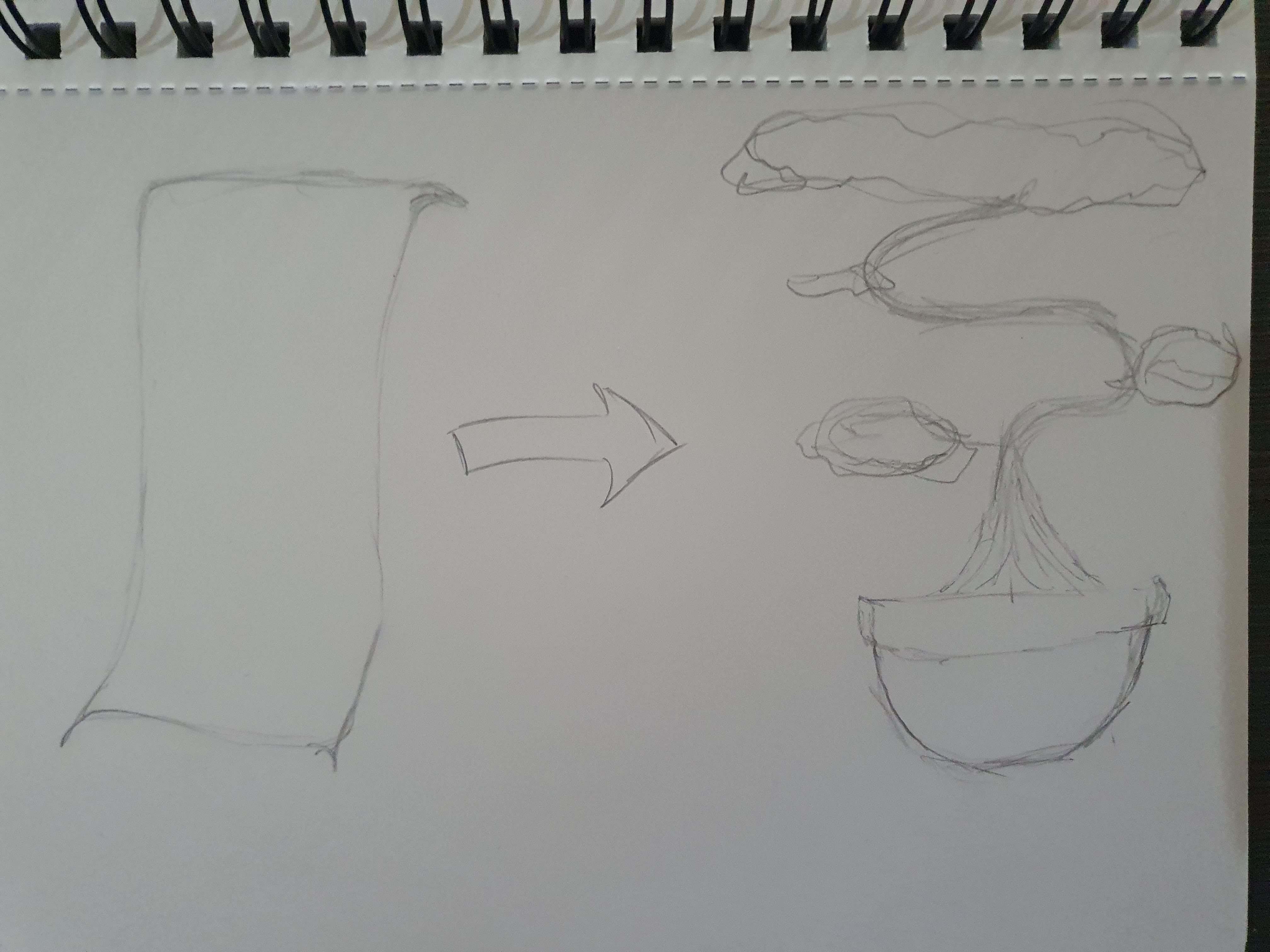
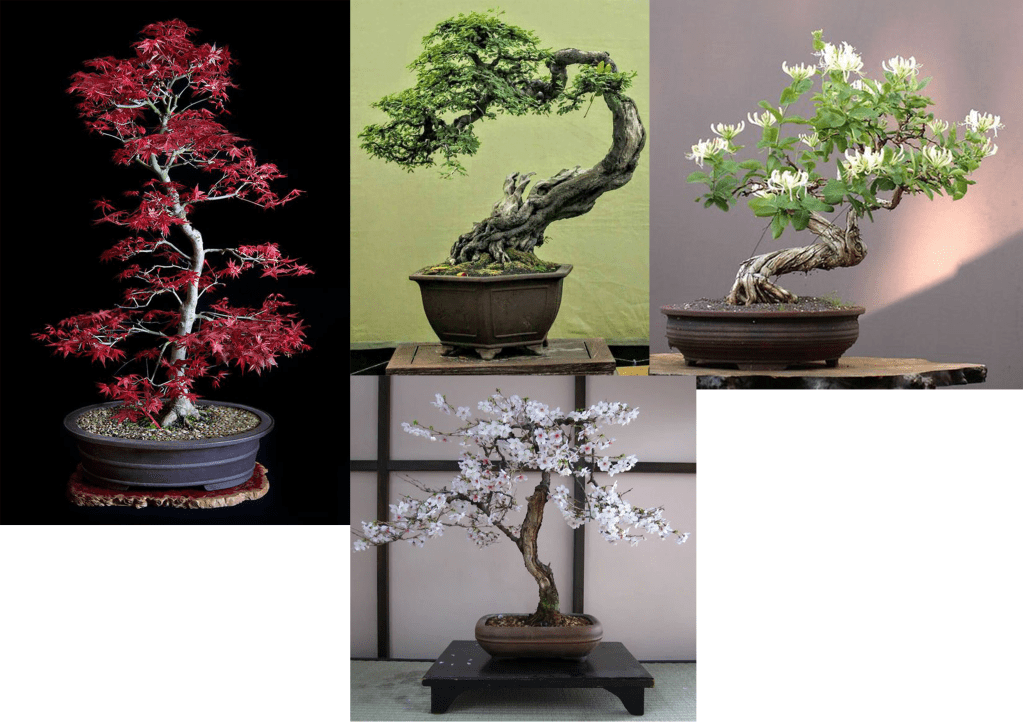
Speaking of receipts, I couldn’t help but come up with some kind of comedic concept entirely based on a pun. That is where this whole thing started, as I believed it would be funny for the receipts to come full circle and be turned back into a tree-like form. Since the quills had a tendril-type nature to them already, I thought it would be cool to have them combine and twist together to form a bonsai tree. Tying up all those elements together created the multilayered joke that is ‘The Money Tree’ since the receipts are a form of money spent and the bonsai tree is a symbol of wealth and abundance, creating a balance between the two. If I hadn’t gone with my chosen final piece, this would have definitely been in the running.
Going through Concepts – Worn Gauntlet Piece
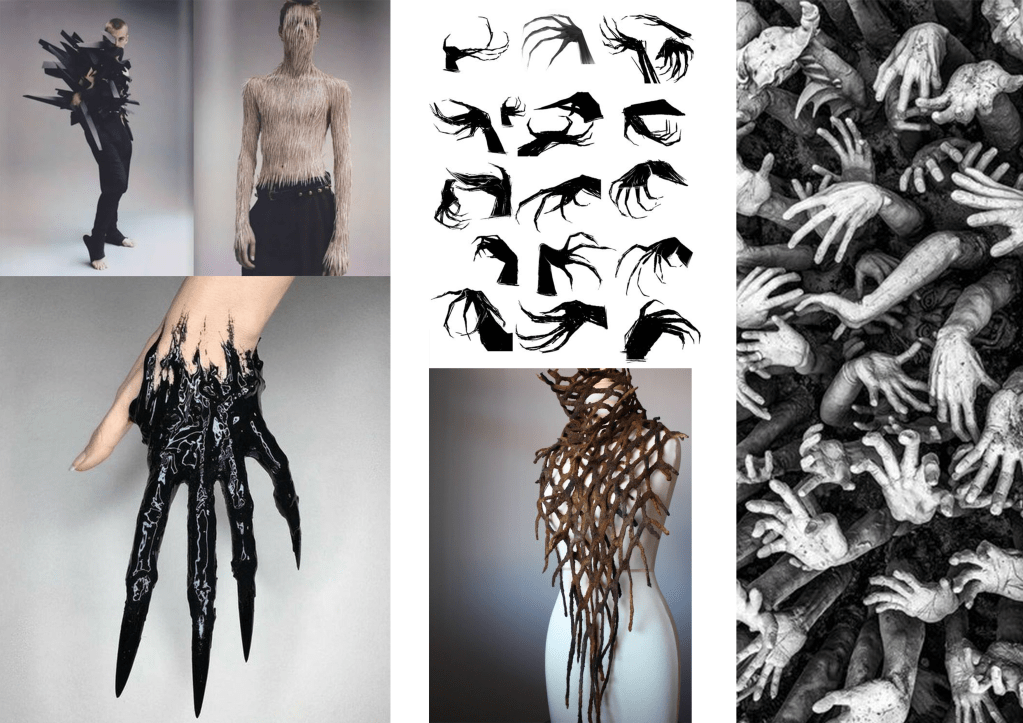
Coming back to my original play experimentation with paper, I wanted to try and combine my worn piece and mutation research to create a sinister gauntlet that could be worn but also be used as a decorative piece. Although this piece was fun in theory, the creation of the mutation was a bit tricky to figure out in practice. Perhaps with more preparation and dedication to experimentation, I could find a way to recreate this concept into something different in the future.
Going through Concepts – Collective Hole Installation
(Warning: Trypophobia)
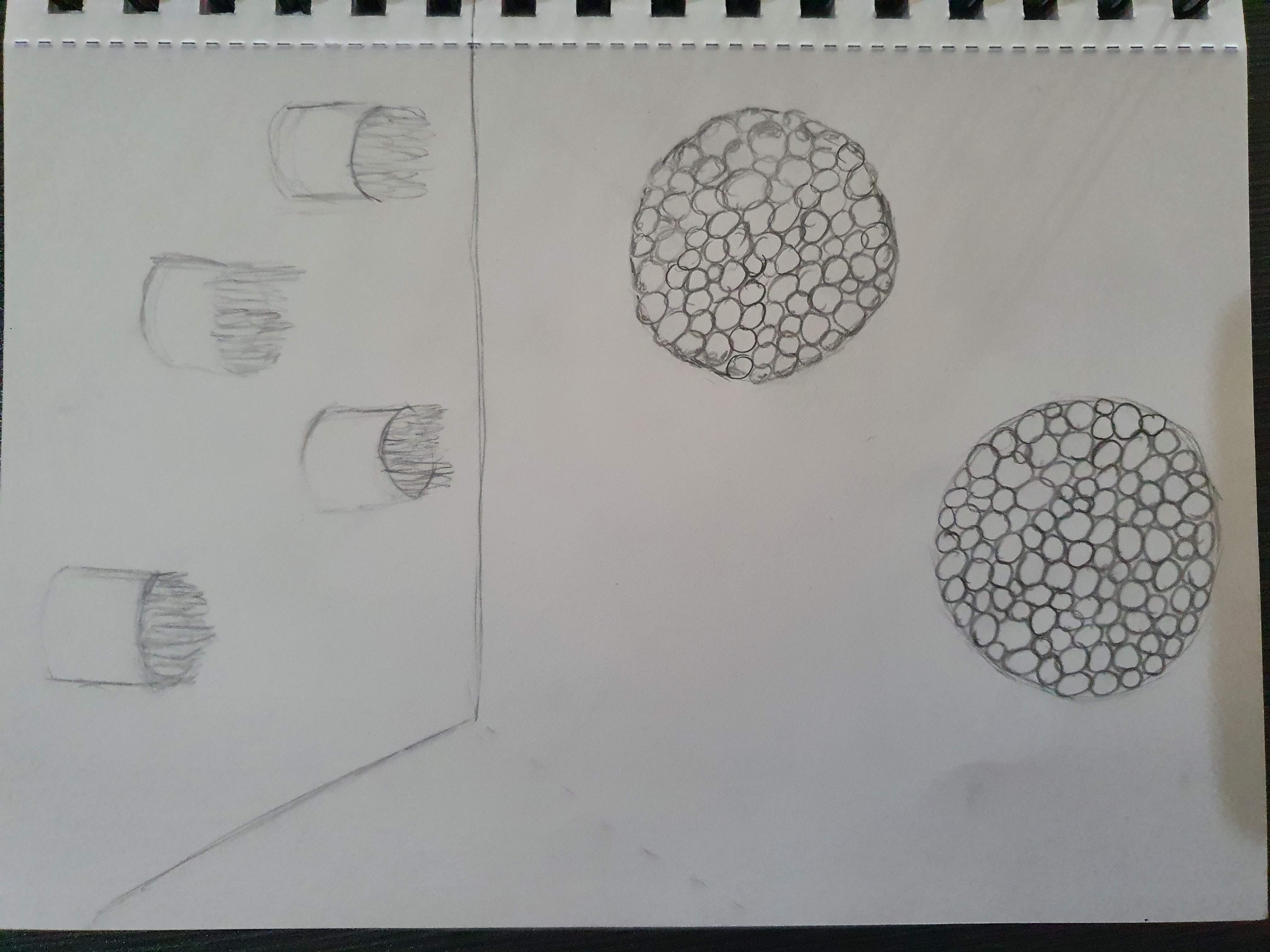
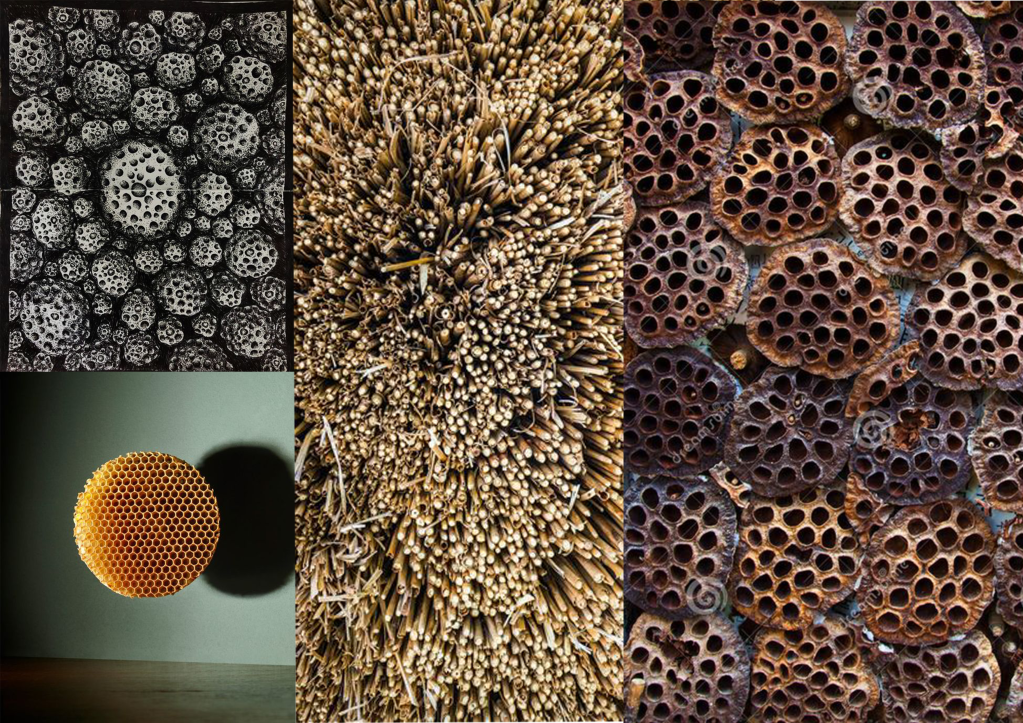
When creating the quills on mass, I kept finding myself creating overflowing piles of them and not really having ways to contain them. Rather than let them pile up and make a mess, I stored them in hollowed-out soda cans which served as receptacles to keep the quills in. However, when a can is full to the brim and you look dead on at it from the top, it creates this strange effect as if you were looking into a honeycomb where the holes just pile up and overwhelm the sense. My initial concept for this idea was to have the cans filled with quills mounted on the wall either compiled close together or separated, creating either a compact wall effect or having the quills themselves mysteriously sprout from the wall. If I didn’t want to include colour in the finalisation of this project, I would have gone with this concept due to the overwhelming black and white that could have come from it.
Going through Concepts – Overgrowing Chains
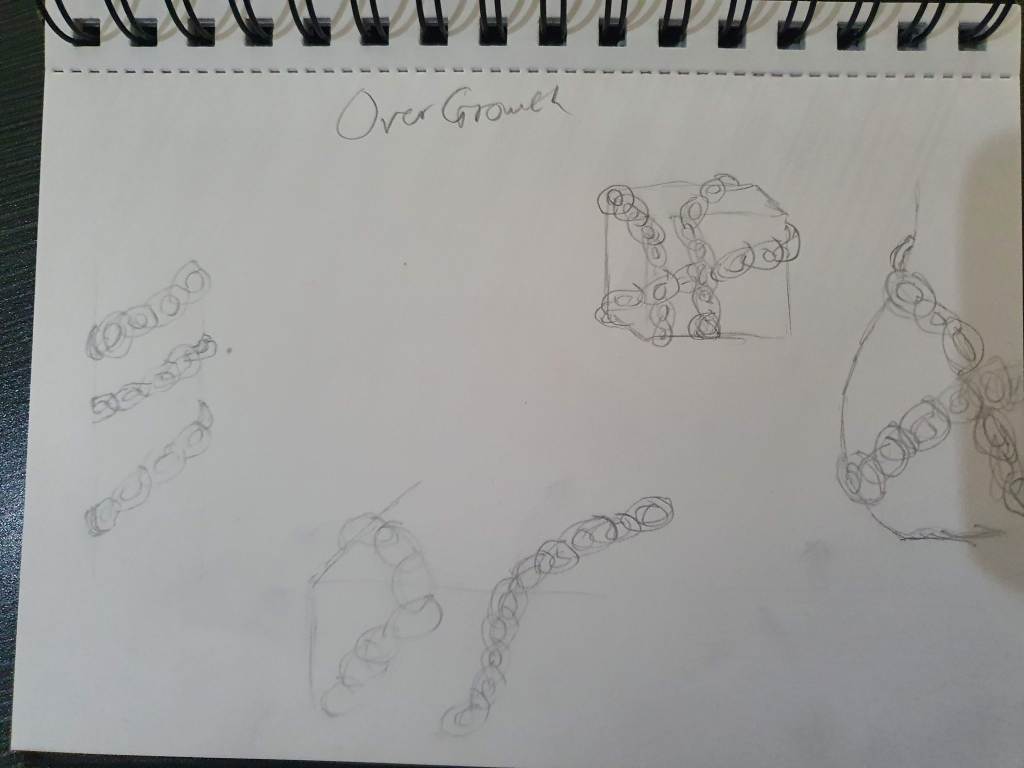
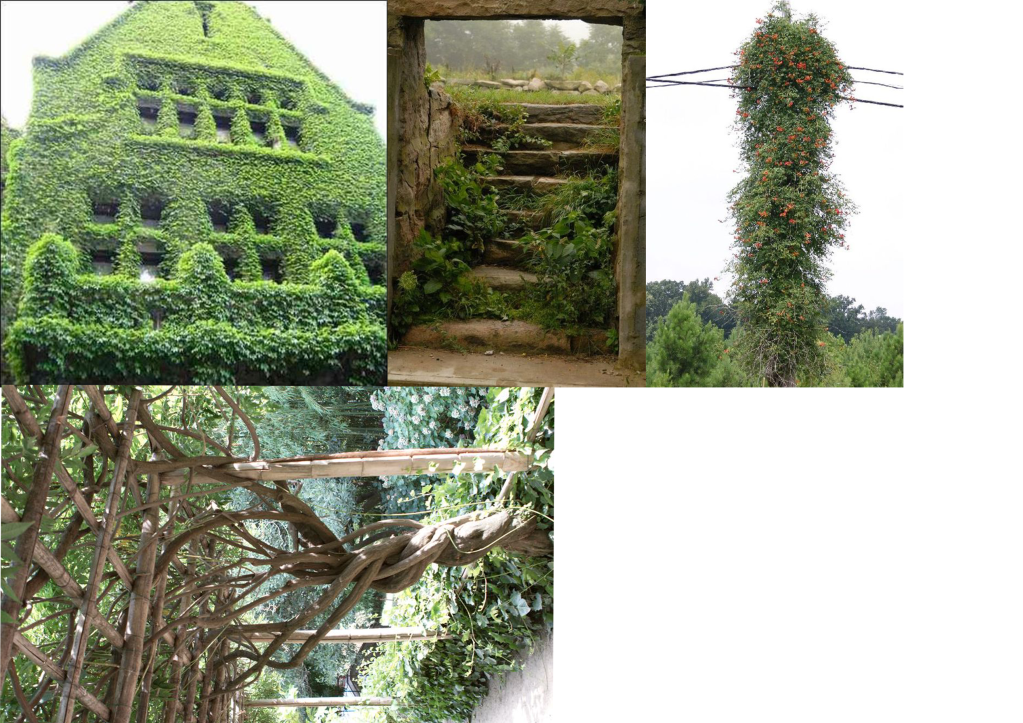
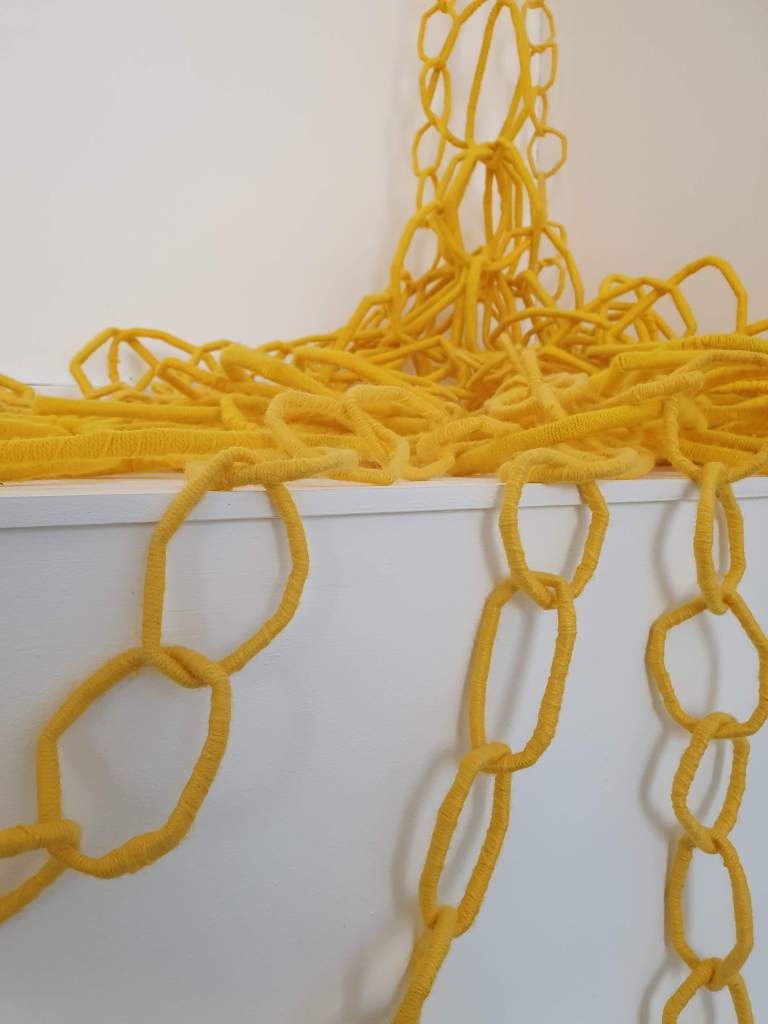
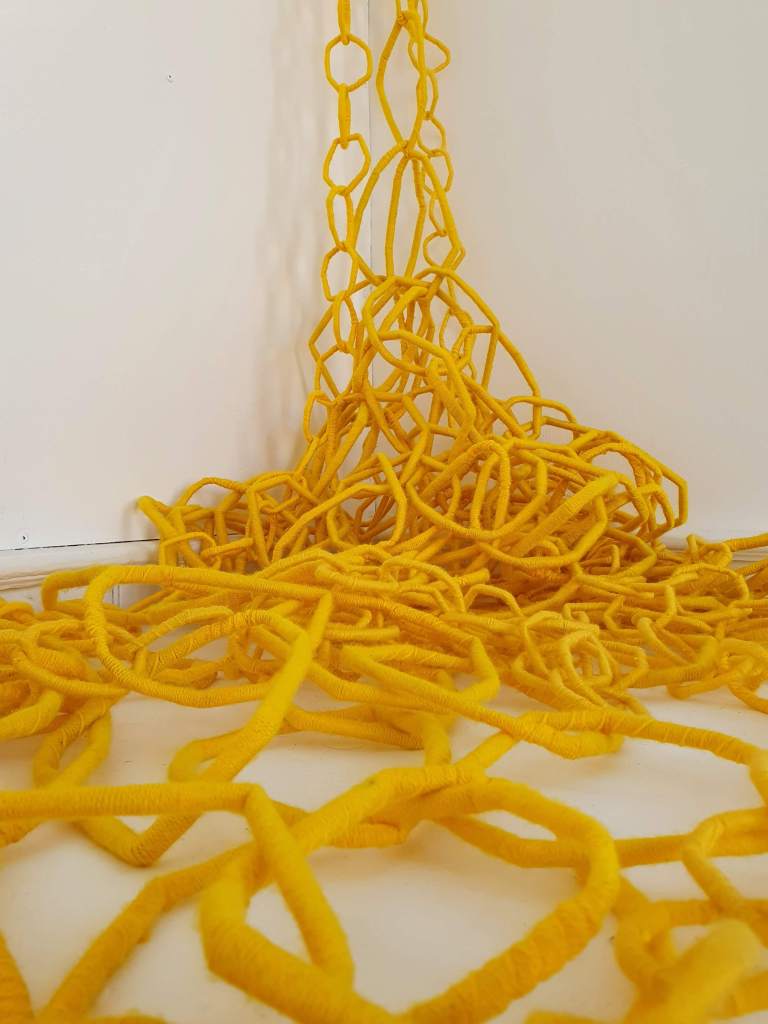
Finally, we arrived at the concept I could not get out of my head. As soon as I realised that the quills could loop in on themselves, I was immediately brought back to my chain-making that I have done in a few past projects. However, rather than these chains forming a large netting, I wanted them to grow longer than they ever have before and begin taking over a space. The furthest I would have gone with this concept is if the chains were taking over a still life, but for this project I want the making itself to be the focal point, rather than just the end product.
Making with Chains
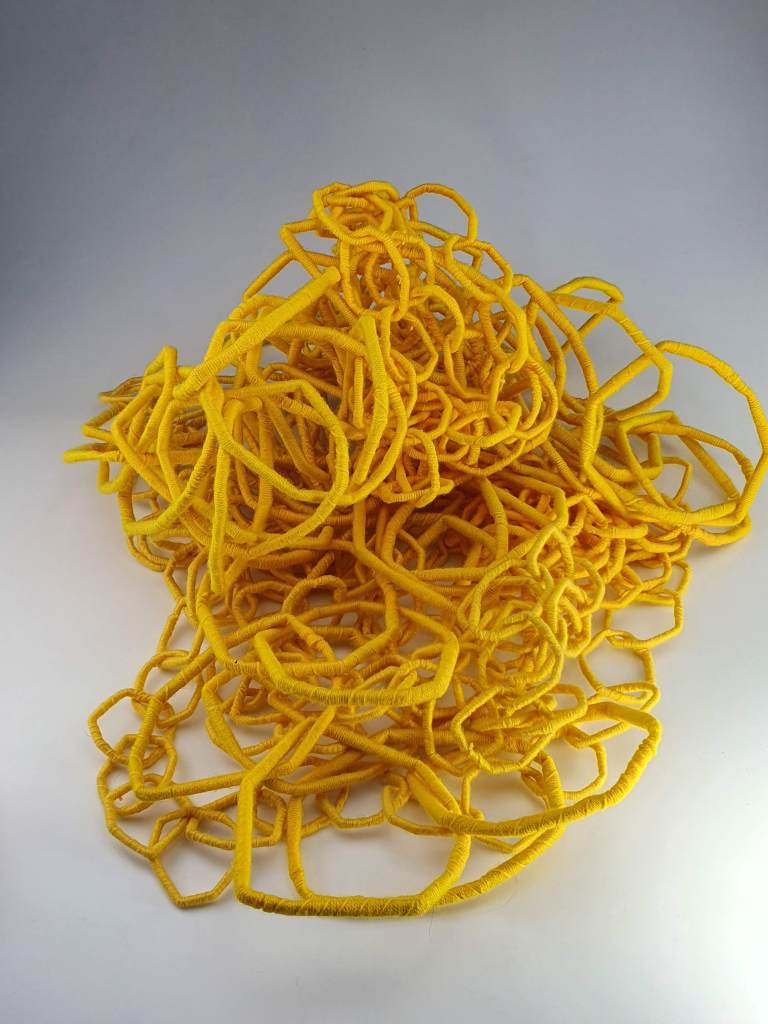
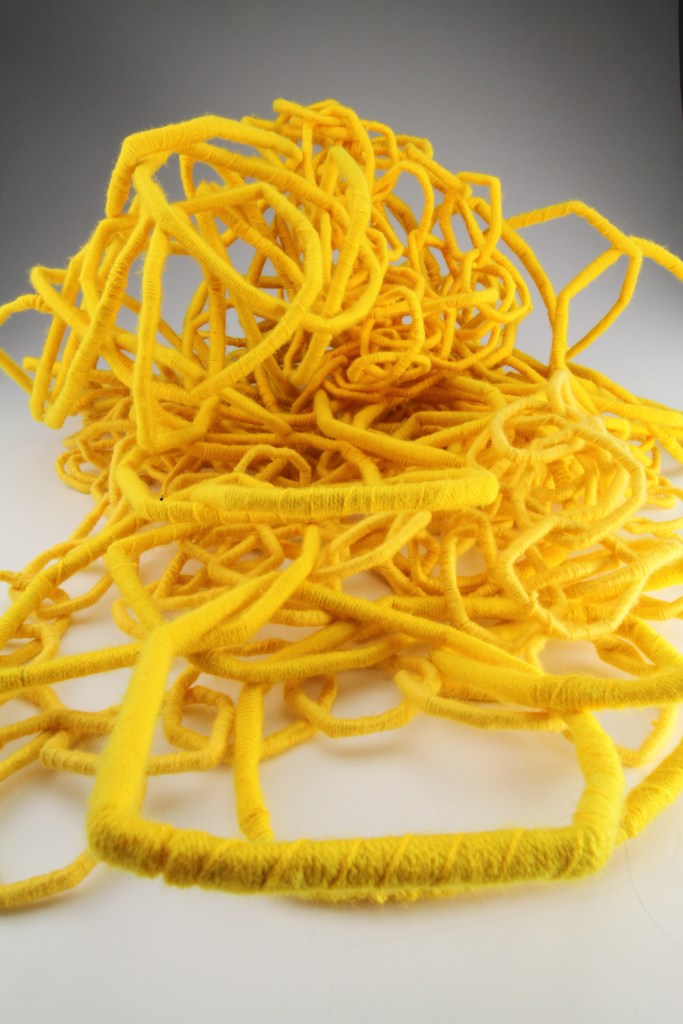
When it came to making the chains it was a step more of making than I was used to. Rather than having the plastic straws ready for me to wrap the wool around, each paper quill was made by my own hands which added an extra layer of repetitive making. To create the loops I would coil the quills in wool and bend them into themselves to create a continuous shape. Since the paper would never bend the same way, a lot of the chain links themselves are unique with each bearing a new form of the shape.
Now originally I used the yellow wool as a way to just experiment with colour and to get rid of the yellow that had been stockpiling since the last time I made chains. However, when I realised I wanted this project to showcase my passion for repetitive making, I thought it would be best to go with a vibrant hue of yellow throughout the whole making process. That way the yellow itself can be used as a symbol for the joy I feel when making in repetition, as well as the vibrancy the colour radiates having the potential to overwhelm the viewer into feeling that same sense of joy.
When it came to making chains, I experimented with my making testing out which ways I could inevitably take these forms. These makes include;
- An 8×8 Chain Net comprised of Large Links
- A Big Looped Circular Design that can be worn as a form of Poncho
- 4 Individual Chains, Each one bearing a different quality
- Small Links
- Big Links
- Small Links, Different Yellow
- Small Links, Tightly Bound
- I found that the more I made the quills, the tighter I could wrap them in on themselves which led to early batches being wider in diameter than the batches I made during the break.
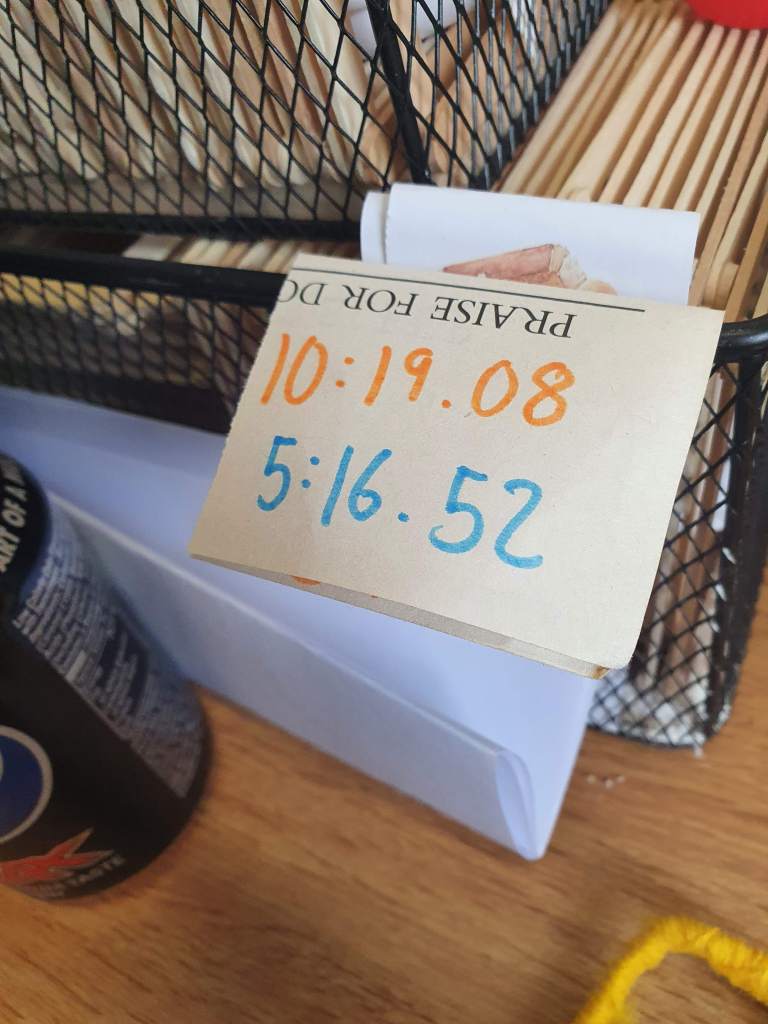
Since I had the majority of the quills made before I figured out what to do with them, I realised it would be difficult to figure out the exact total time I spent making all of the links themselves. To create an approximation, I timed how long it would take for me to create a singular link from start to finish without distraction. (As seen below: Orange = Big Link, Blue = Small Link) Due to the nature of my mind sometimes spacing out when I make, it’s also difficult to figure out how long I spend distracted so I gave myself a leniency of 2 minutes of distraction per link. With those calculations known, I counted up all the links that I made and came up with these results*.
Net = 64 Big Links
Poncho = 25 Big Links
Chain 1 = 91 Small Links
Chain 2 = 54 Big Links
Chain 3 = 94 Small Links
Chain 4 = 79 Small Links
Total Small Linkss = 264
Total Big Links = 143
Total Links Made = 407
Time Taken for Small Links = 23.18 Hours
Time Taken for Big Links = 24.59 Hours
Total Time Taken = 47.77 Hours
*Note: Calculations provided only go towards fully constructed links. Total making time is still unknown due to quills that haven’t been coiled.
Drawing Experimentation – Out-of-Control Chains
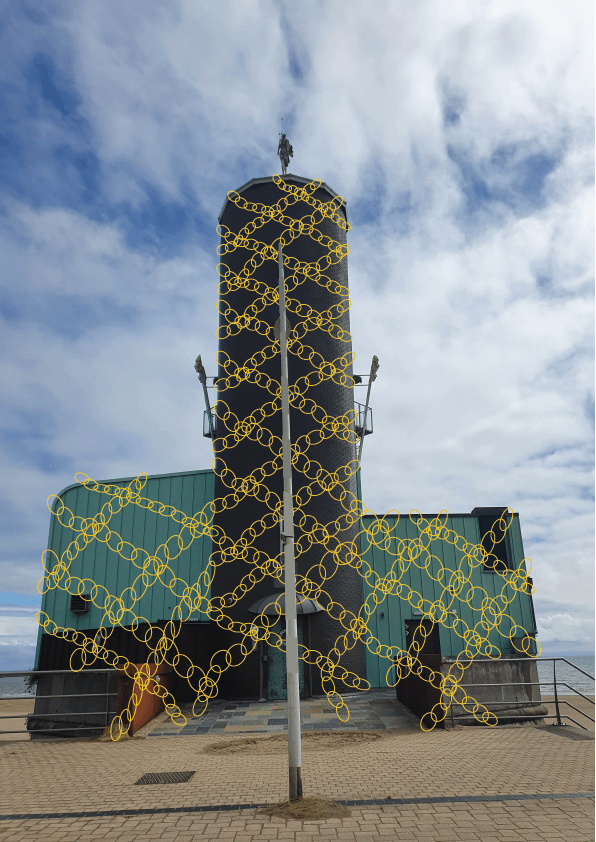
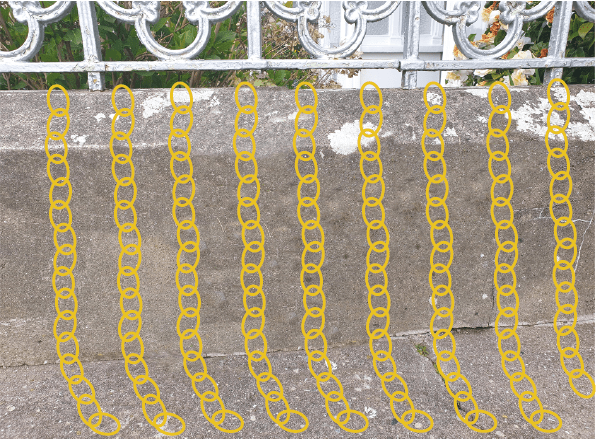
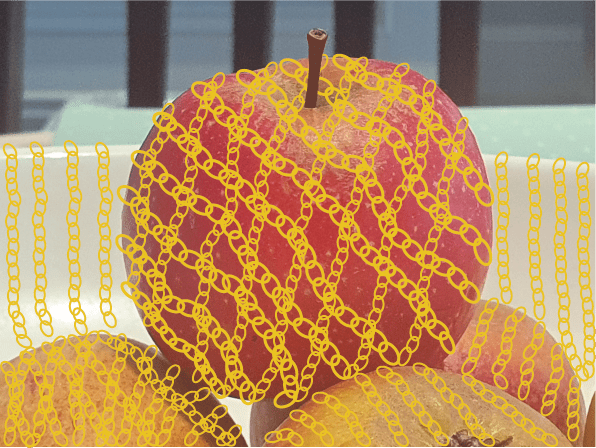
Once I figured out that chains were the path I was taking, I thought it would be fun to do a drawing exercise showcasing the potential making chains would have if they went out of control. Rather than print out images and make a whole mess trying to paint links over the top, I decided to digitally draw links over some pictures that varied in scale. These scales include;
- Large (Chains wrapping around the Swansea Observatory)
- Medium (Chains sloping down my Garden Wall)
- Small (Tiny Chains taking over a Fruit Bowl)
This exercise was a lot of fun to do and provided me with a great break away from possessive making. Since I already like digitally drawing out Steve’s and Links I might expand on this exercise more in the future, maybe make a photography series where the links take over more well-known places.
Final Piece – Exhibition for Summer Degree Show 2022
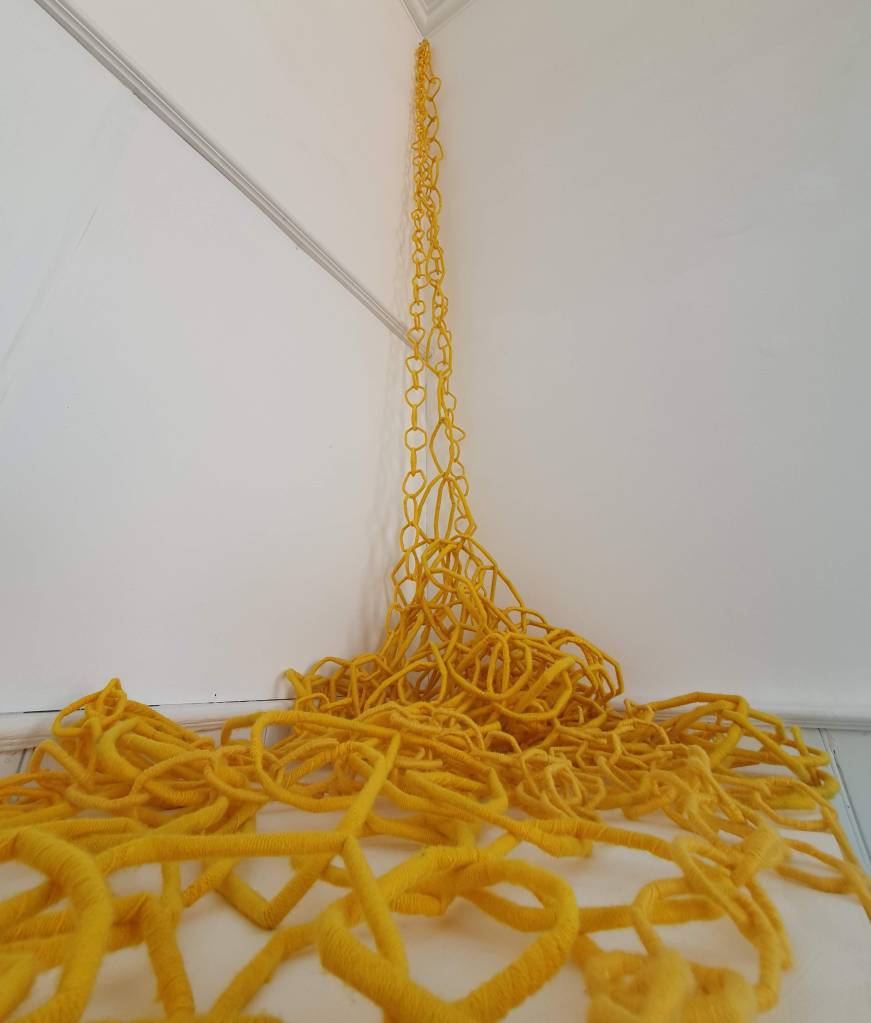
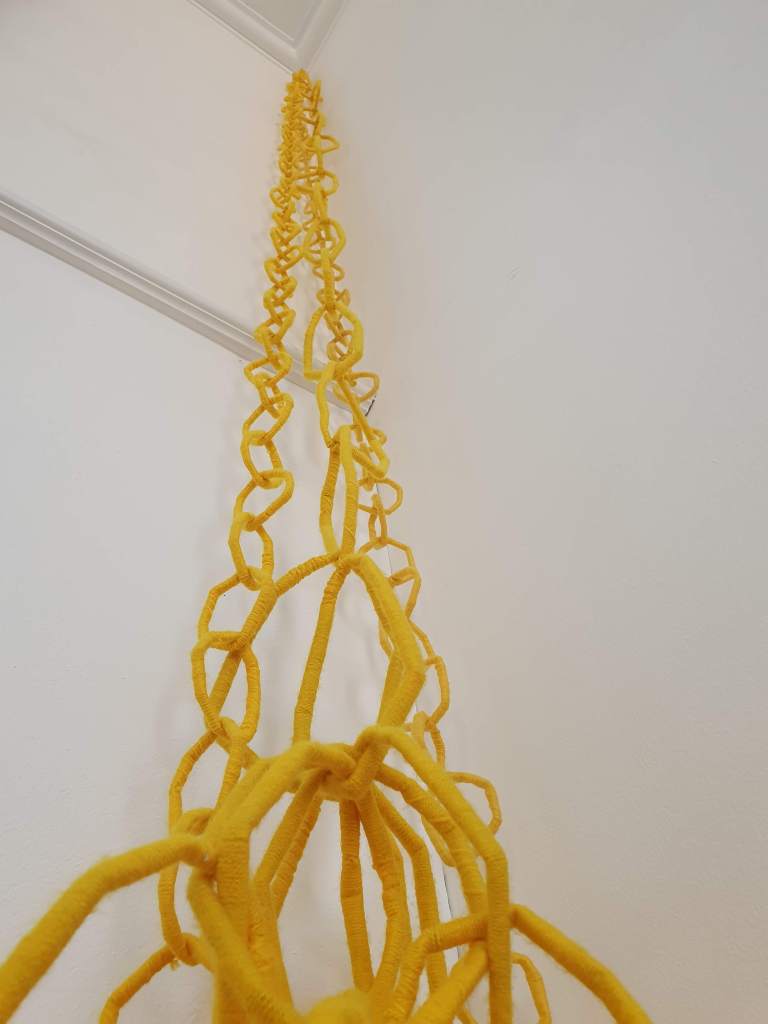
Honestly, I cannot be more proud of how this piece has turned out. I’ve always wanted to make an installation on such a large scale but never dared to attempt it due to most installations of this size being made of materials I am not quite fond of using. There is also a sense of pride that comes from this piece due to it being a showcase of who I am as an artist. Someone whose passions grow in excess and just flood out in peculiar ways, never conforming to norms and always catching people off guard. It’s also fun to think back to when I first found myself as a maker, making these large links out of plastic straws and wool in Foundation and seeing it all come full circle in my final project of Undergrad.
In conclusion, this project has been quite the journey of self-reflection and chaos but I’m glad I saw it through till the end. If anything I am more excited than ever to see what lies ahead of me as a creative, who knows what the future will hold. All I know is that I have no idea what’s happening next but can’t wait to jump in. Thanks for listening.

 Samuel Mathias